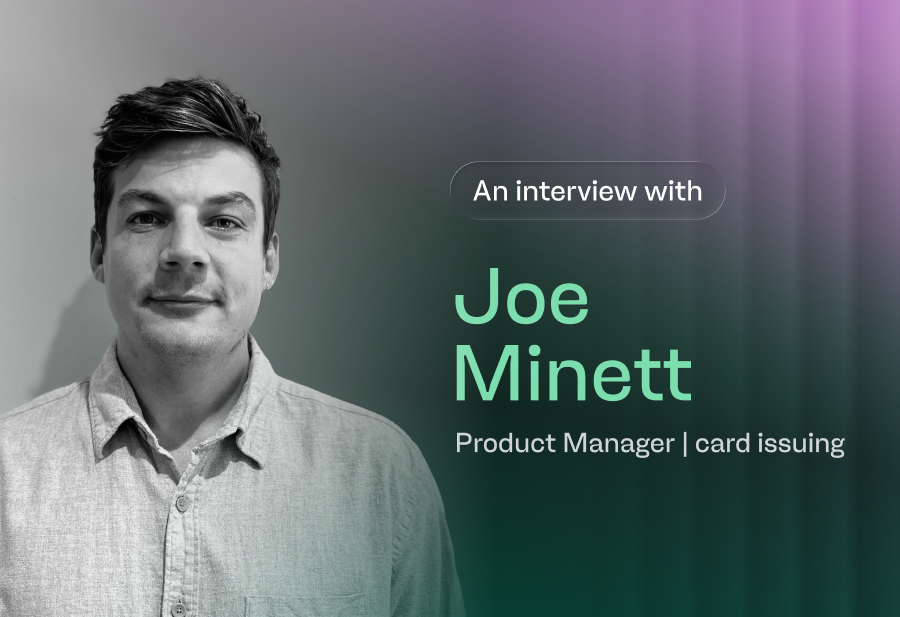
Welcome to The Engine Room @ payabl., a series dedicated to showcasing the incredible talent behind our success. We're pulling back the curtain to introduce you to the dedicated team members who build, secure, and refine our world-class solutions. Learn about their challenges, triumphs, and what it truly means to make it fun while fostering a culture where teamwork flows first and every individual's potential is ignited.
Next up in the series: Joe Minett, Product Manager for card issuing.
When Joe Minett describes his job, he doesn't go for a description or a title . He refers to the moment a card taps a terminal, the end goal of his role at payabl. "Every time you use your card — whether that's online, physically at a coffee shop, or added to your digital wallet — I'm the person obsessing over making that seamless from all perspectives."
That obsession has a wider purpose for Joe. He leads Product for card issuing at payabl., an area that has grown into a strategic pillar of the business. It's a job that demands a calculated mix of commercial thinking, regulatory literacy and hands-on delivery. And in a company where product managers are expected to own their role outright, Joe has exemplified what true product ownership looks like in practice.
Moving money outwards
If payabl.'s wider platform is built on the idea that money is always in motion, then Joe's product area is where the movement travels outward. At payabl., acquiring brings money in, business accounts hold it and transfers move it. Cards, in Joe's words, are how businesses "manage their cash."
"We support businesses with acquiring, saving and transferring," he explains. "Now we're in a position to support them with managing their outlay through payabl. cards. We know how important it is for businesses to be able to manage this properly, which is why we give our customers the tools to do it."
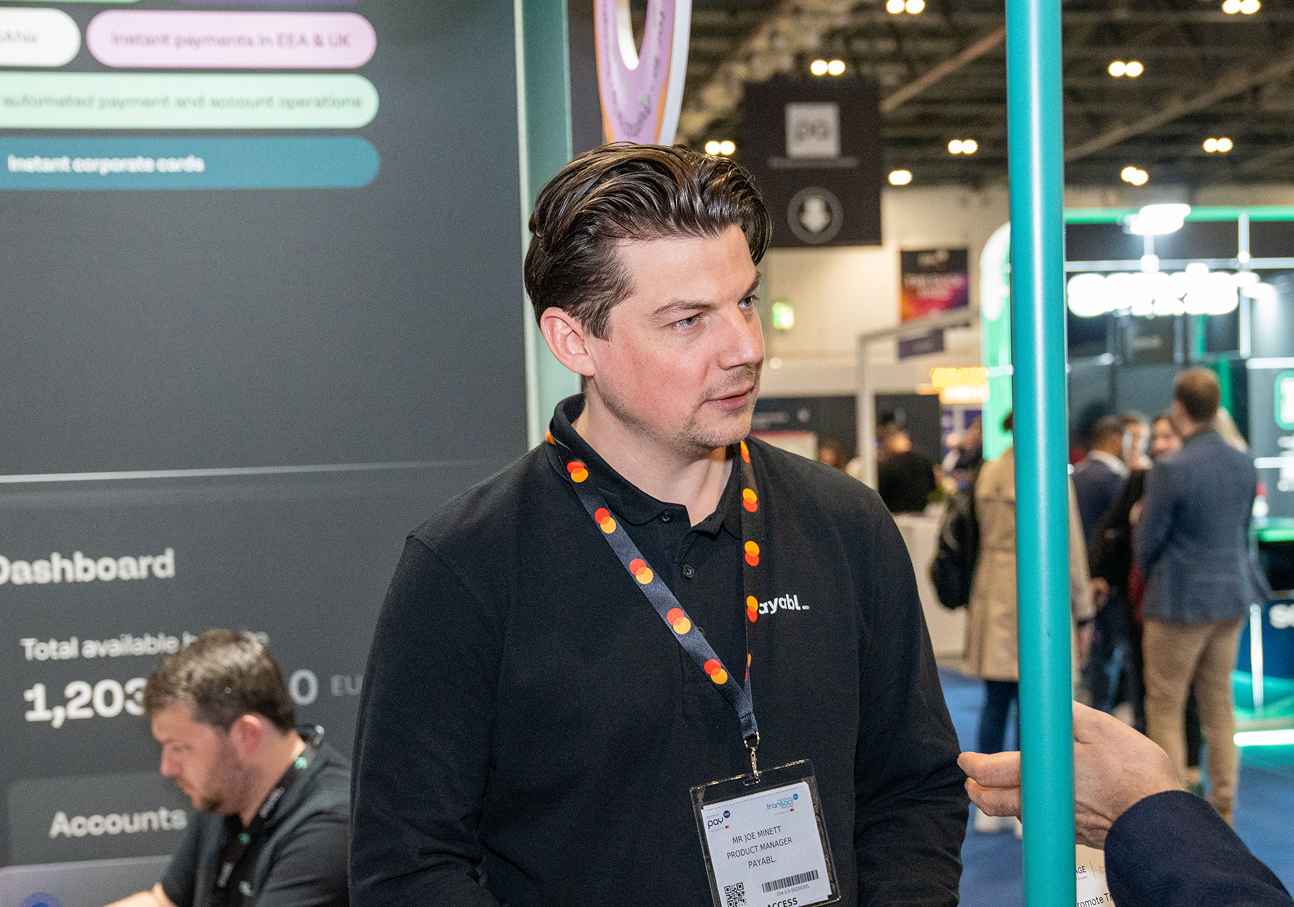
That framing, with cards as the outbound side of the money flow, sits at the heart of how Joe thinks about the product. He's less interested in card issuing as a category and more interested in the moment a merchant or their customer needs to spend.
Each aspect is considered; the tap to pay, the opening of a digital wallet or a virtual card generated on demand. Each of those interactions carries the full weight of payabl.'s infrastructure behind it, and Joe's role is to make sure none of that weight shows up in the customer’s experience.
The invisible work behind the work
Ask Joe about what he's most proud of, and he doesn't reach for a headline feature. He talks about the parts of the job that happen behind the scenes.
"Sometimes the unsexy stuff moves the needle the most," he says. It's a line that captures how he thinks about product work at payabl. The visible releases matter, but they only work when the layers underneath them are properly built.
For Joe, that means spending as much time on the groundwork as the final product. "If the plumbing isn't right, the polish doesn't matter. You have to own the whole thing, including the parts that get seen and the parts that don't. That's the standard." This means the process design, the operational readiness and the pieces that a merchant will never think about.
"You're constantly balancing what the customer sees with what has to happen behind it," he explains. "The best outcome is when a merchant doesn't have to think about how something works. They just use it, it does what they expect, and they move on with their day."
Owning that invisible layer is, in Joe’s view, where real accountability and ownership lives. It's easy to take credit for a launch, but it’s harder to take responsibility for the reliability and quality of the groundwork you’ve laid. Joe treats both as the same job.
How payabl. builds
If the invisible work sets the standard, Joe's day-to-day operating rhythm reflects the way payabl. runs Product across the platform. Ideas usually start with a customer pain point or a note from sales. An idea even arose from someone saying "you know what would be great to have here?" From there, the process is deliberately compact.
His thought process works something like this: "rough out a problem statement, then a quick validation: is this actually a problem? How many customers are affected? What's the commercial upside?" If a concept passes that first filter, discovery moves into engineering and design. Solutions are sketched and planned, a winner is chosen, and the team refines, plans, builds, tests and ships.
"We're big on shipping small and iterating," Joe says. "No one wants to spend six months building something only to miss the mark. We move forward quickly."
Prioritisation and where to place your focus is where his work gets tricky. Joe dubs it the “eternal PM struggle”. It involves impact-versus-effort scoring, customer feedback and competitor movement, which all feed into the roadmap. This is alongside the reality of working in a regulated space, where things move at speed.
"In fintech, you can't just move fast and break things. You move fast and don't break compliance." Joe maintains a close relationship with the risk and legal teams, and points to them as guardrails rather than “the department of no”. When tackling high-impact but regulatory-heavy launches, his approach is the same: break the work into phases, ship the compliant version first, then layer the rest on top.
That discipline is a direct reflection of how payabl. builds — quality and reliability weighted carefully against speed, with the understanding that trust in payments can’t be rushed.
Ownership as a principle
If there's one word that Joe defaults back to when he talks about payabl., it's ownership.
He best describes it when talking about what attracted him to payabl. In the first place. “I wanted somewhere I could have real ownership and impact, not just be a cog in a machine. payabl. offered me a chance to shape and build an entire product area in my vision, not just maintain it.”
This mindset shows up in how he describes his team's approach and in the advice he gives to anyone considering joining.
"At other companies, you might own a tiny slice and need fifteen sign-offs to change a button colour," he says. "Here, I genuinely own the card issuing experience — from strategy to execution. It's empowering, but it also means there’s nowhere to hide. If something's broken or doesn’t work, you have to own it."
That framing runs vertically throughout the team too. Joe describes a culture with very “little ego, where everyone’s willing to roll their sleeves up regardless of title”. This means an environment where senior leaders jump into support tickets and junior engineers feel confident to challenge product direction.
He adds “I have direct access to leadership, and can grab time with the CEO or CPO without cutting through five layers of bureaucracy. That level of ownership and autonomy has accelerated my growth massively.”
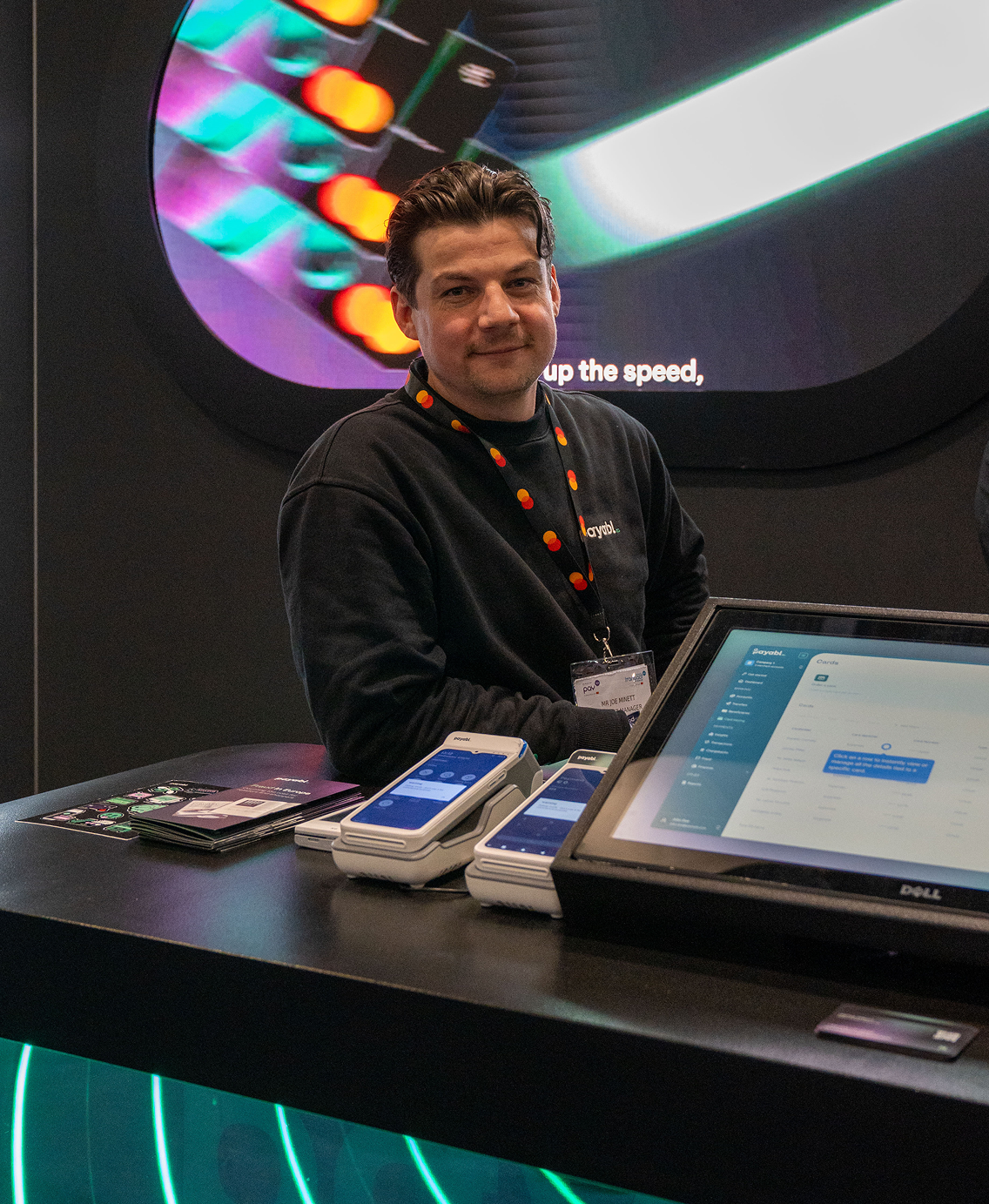
When asked what inter-departmental collaboration looks like, he said "genuinely collaborative. It’s not 'PM throws requirements over the wall and hopes for the best.'" Joe sits with engineering daily, actively seeks their input and ideas (“they often have better ideas than I do”), and treats compliance, sales and customer success as part of the same team. "Payments is a team sport. You can't build in a vacuum with scheme rules, regulations and real customers depending on you."
The technical environment Joe works in supports the fast pace. payabl.'s stack is cloud-native, API-first and designed for scale. This sits in sharp contrast to an industry Joe describes as "often running on legacy systems held together by hope and COBOL."
The modern foundation he works in means clients can integrate quickly and adapt without rewriting everything. "A customer might use cards alongside acquiring and expects a unified experience. That integration is powerful, but complex. We're constantly working on smoother handoffs."
It also means that card issuing plugs straight into the broader payabl.one ecosystem — acquiring, accounts, ledgering, and more. Ownership across multiple channels is the end result.
What comes next
Joe's ownership of card issuing has coincided with a broader ambition inside payabl. that’s moving fast with market context. 65% of cardholding SMEs still use a personal card for their business transactions, and small businesses now expect a single provider to cover payments, cards, financing, cross-border and security in one place. Card issuing is central to closing that gap.
"Without giving away the secret sauce," Joe says, "we're doubling down on issuance — making it even easier for us to offer cards as part of their product, not a bolt-on. We're also exploring clever stuff around real-time spend controls and richer data insights for cardholders. “
His advice to anyone thinking about building at payabl. carries the same theme he's returned to throughout the conversation — ownership. "Come ready to own things. This isn't a place to coast or wait to be told what to do. If you get energy from shipping real products, solving hard problems and working with smart people who bring good vibes to work, you'll love it. Bring curiosity too. Payments have a learning curve, but everyone's happy to help you climb it."
For Joe, that's the bottom line. Card issuing is a technically complex, tightly regulated, product area. In his view, the only way to build it well is to “genuinely own the experience” from start to finish. In Joe's slice of the ecosystem, it's what turns licences into a growth driver.