
The best online payment processing services are not background infrastructure. They behave more like a quiet sales rep standing next to every checkout button, deciding in real time whether a sale completes, whether a customer trusts the page enough to finish typing their card number, and whether a declined transaction gets a second, successful attempt.
This article breaks down what online payment processing services actually do, how they influence revenue rather than just moving it, what to look for when comparing providers, and how payabl. fits into that decision.
What are online payment processing services?
Online payment processing services are the technology and financial infrastructure that authorise, process and settle digital payments between a customer and a business. In practice, that means a customer enters card or bank details, the processor routes that request through the card networks and issuing banks, and funds move from the customer's account to the merchant's account, usually within one to three business days.
A processor typically combines three functions that used to be bought separately:
- A payment gateway, the software layer that encrypts and transmits payment data from your checkout to the processor.
- Payment processing, the behind-the-scenes communication with card networks (Visa, Mastercard, and so on) and issuing banks that authorises or declines a transaction in roughly one to two seconds.
- A merchant account, the holding account where approved funds land before they are paid out to your business bank account.
Modern providers, often called payment service providers or PSPs, bundle all three so a merchant does not need to negotiate separate contracts with a gateway vendor, a processor, and an acquiring bank. That consolidation is what most businesses mean today when they search for online payment processing services.
How does online payment processing work, step by step?
- A customer submits payment details at checkout, online, in an app, or at a POS terminal.
- The payment gateway encrypts the data and sends it to the payment processor.
- The processor routes the request to the relevant card network, which forwards it to the customer's issuing bank.
- The issuing bank checks funds, fraud signals and card validity, then approves or declines the transaction, typically in under two seconds.
- The response travels back through the same chain, and the customer sees "Payment successful" or a decline message.
- Approved funds settle into the merchant account and are paid out to the business's bank account on an agreed schedule.
That entire sequence happens before a customer has finished reading your order confirmation page. The speed is invisible by design, but every one of those steps is a point where a sale can be won or lost.
Why online payment processing services behave like a sales partner, not just plumbing
Here is the analogy worth sitting with: think of online payment processing services as the waiter in a restaurant, not the kitchen. The kitchen (your product, your pricing, your marketing) gets the customer to the table. But it is the waiter, how fast the order is taken, how smoothly the bill arrives, how confidently questions are answered, who determines whether that customer finishes the meal happily, leaves a tip, and comes back. A slow, confusing, or untrustworthy waiter can sink an otherwise great meal. A payment processor plays the same role at the exact moment money changes hands.
Three mechanisms explain why processing quality shows up directly in revenue.
1. Checkout friction is a leak, not a detail
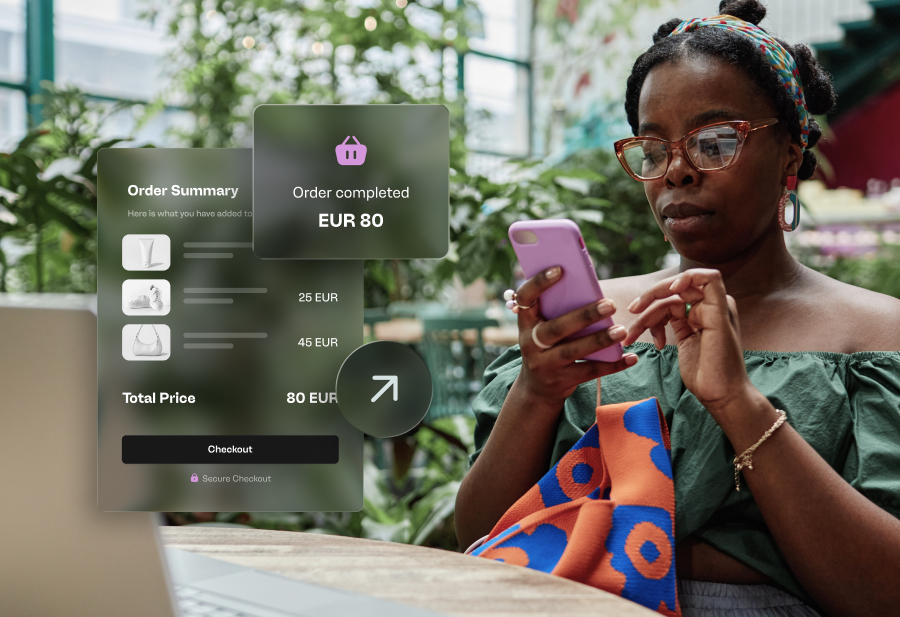
Every extra field, redirect, or unfamiliar payment logo at checkout gives a customer a reason to hesitate. Online payment processing services that support one-page checkout, saved cards, digital wallets and local payment methods remove that hesitation before it becomes abandonment. For a merchant running paid acquisition, this is the cheapest conversion lift available: the traffic is already paid for, so the only question is whether checkout lets it convert.
2. Approval rates are revenue, not a technical metric
A transaction that gets wrongly declined is a sale you already had and lost anyway, often without the customer even complaining, they simply try a competitor. Processors with smarter authorisation routing, retry logic and fraud scoring tuned to reduce false declines can recover a meaningful share of this leakage. For a subscription or SaaS business, this matters even more because failed renewal payments quietly drive involuntary churn every billing cycle.
3. Trust signals close the sale
Recognisable payment logos, secure checkout badges and familiar local payment methods reduce the psychological friction of entering card details on an unfamiliar site. A payment service provider that supports the methods customers already trust and use daily, from cards to Tap to Pay to regional alternative payment methods, is effectively vouching for your business at the riskiest moment of the transaction.
What to look for when comparing online payment processing services
Not all providers compete on the same axis. Use this as a working checklist when shortlisting payment processing for ecommerce or for a subscription business.
| What to check | Why it matters for revenue |
| Local and alternative payment methods supported | Each unsupported method a customer prefers is a potential lost sale, especially cross-border |
| Multi-currency processing and settlement | Removes FX friction for international customers and avoids margin loss on conversion |
| Authorisation and approval rates | Directly recovers revenue lost to false declines |
| Omnichannel support (online, POS, Tap to pay) | Keeps reporting, reconciliation and customer experience consistent across every sales channel |
| Transparent online payment processing fees | Protects margin and avoids surprise interchange or cross-border surcharges |
| PCI DSS compliance and fraud tooling | Reduces chargeback exposure and keeps the business audit-ready |
| Payout speed and reliability | Affects cash flow, which matters more as transaction volume grows |
| Integration effort | Determines time to launch and ongoing engineering overhead |
Understanding online payment processing fees
Online payment processing fees usually combine three layers: an interchange fee set by the card networks, a markup from the processor, and sometimes a fixed per-transaction fee. Pricing models vary:
- Flat-rate pricing: one simple percentage per transaction, easier to predict, often less competitive at higher volumes.
- Interchange-plus pricing: the real interchange cost passed through, plus a transparent processor margin, typically better value for growing merchants.
- Tiered pricing: transactions are bucketed into pricing tiers, which can obscure the true cost of certain card types.
A merchant evaluating best payment processing services should ask for an all-in cost example using their actual transaction mix, including cross-border and alternative payment methods, rather than comparing headline rates alone.
Secure online payment processing is non-negotiable
Security is not a feature to compare, it is a baseline requirement. At minimum, secure online payment processing should include PCI DSS Level 1 compliance, tokenisation so raw card data never touches a merchant's own servers, 3D Secure authentication for card-not-present transactions, and real-time fraud monitoring. Providers that treat these as selling points rather than table stakes are worth a second look, because it suggests they are still catching up.
How payabl. approaches online payment processing services
payabl. is a financial technology provider that gives businesses of all sizes the infrastructure to accept online and in-person payments, run multi-currency business accounts, issue virtual and physical cards, and support over 300 local and alternative payment methods. Rather than treating checkout as a single channel, payabl. is built around the full omnichannel payment journey, online checkout, point of sale, and Tap to Pay, so a merchant's payment data, reconciliation and customer experience stay consistent whether a customer pays on a website, in person, or by tapping a phone at a counter.
For an ecommerce business weighing conversion against cost, or a SaaS finance leader trying to reduce involuntary churn from failed renewals, that combination of broad payment method coverage, multi-currency accounts and consistent omnichannel infrastructure is what turns a payment processor from a cost line into a quiet contributor to the top line.
Online payment processing services decide more sales than you realise
Online payment processing services are not a background utility you set up once and forget. They are present at the single moment where interest becomes revenue, and every design choice inside them, which payment methods are offered, how authorisation is routed, how fast a decline is retried, nudges that moment toward a completed sale or an abandoned cart. Treat your processor as a silent sales partner, evaluate it the way you would evaluate a sales hire, on conversion, approval rates and trust, and it will behave like one.