Merchants often face the same issues that slow customers down at checkout: too many steps, too much manual entry, and too much time to complete. These typically come from entering a 16-digit card number, an expiry date or a billing address, all common friction points for customers.
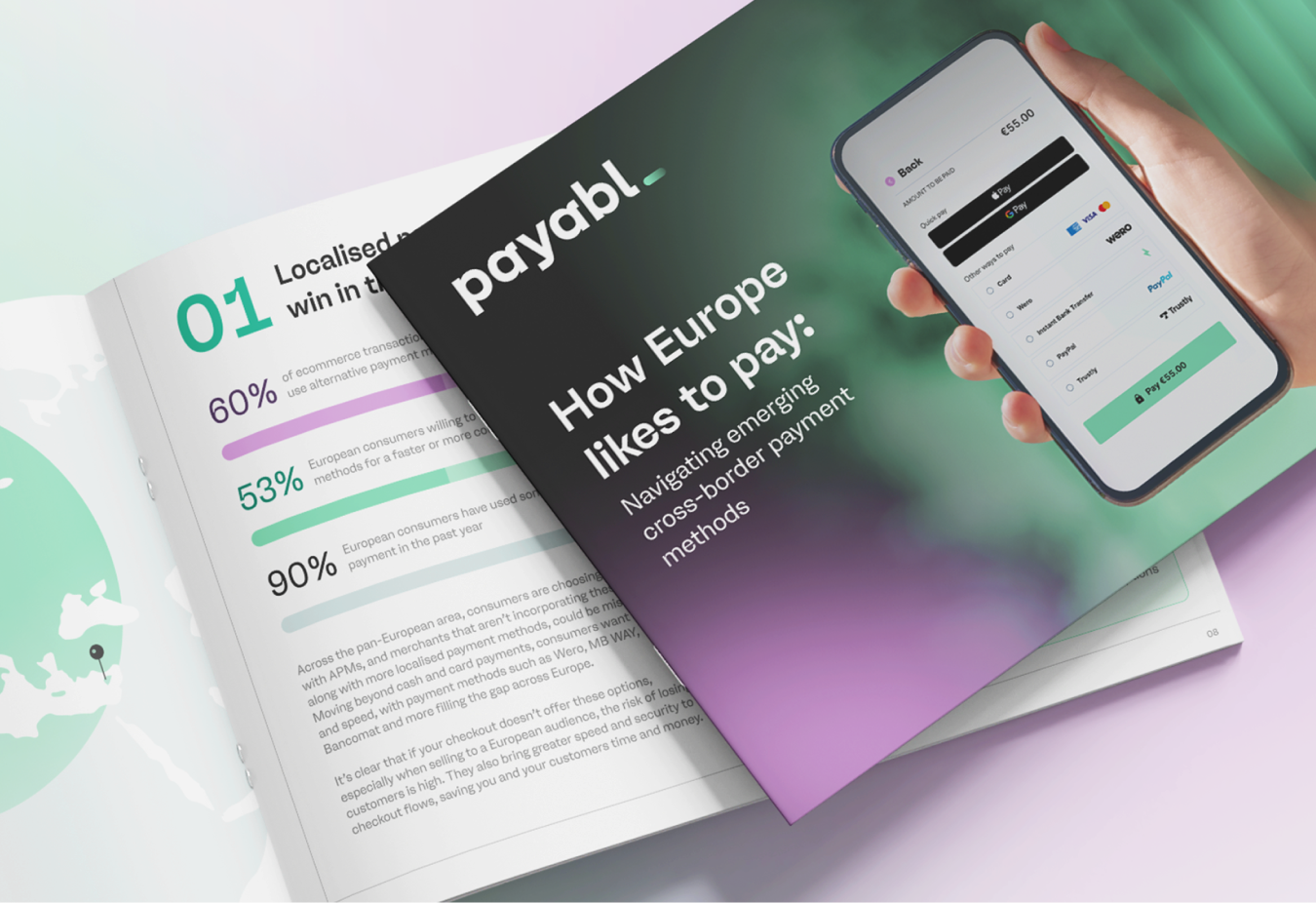
Account-to-account (A2A) payments and digital wallets exist to remove that friction entirely, with data showing that consumers have adopted these trends quickly. This shift is one of the key themes covered in our report, How Europe likes to pay: Navigating emerging cross-border payment methods.
It reveals that A2A payments and digital wallets are no longer niche alternatives to cards, and are becoming the default for a growing portion of shoppers across Europe and beyond.
What the data shows
The report reveals that digital wallet payments accounted for roughly 50% of global payment transaction volume in 2025, with the figure set to rise in the future. Meanwhile, the global A2A market is forecast to grow by 230%, climbing from $1.7 trillion in 2024 to $5.7 trillion by 2029.
In Europe specifically, the momentum is already visible at the country level. Poland's BLIK processes over 140 million monthly transactions, making it the most-used ecommerce payment method in the country ahead of both card payments and bank transfers. Elsewhere in the Netherlands, iDEAL | Wero commands 73% of all online payments, processing over 1.5 billion annual transactions. The numbers show this is established consumer behaviour, and is a habit that merchants can accommodate or risk losing customers to.
What customers actually want from checkout
The appeal of A2A payments and digital wallets is obvious for customers. Consumers want fewer steps between choosing a product and completing a purchase. In fact, more than half of European consumers say they'd switch to a different payment method if it offered a faster or more convenient checkout experience.
When you consider that the alternative, like typing out card details manually, can take a customer out of the natural shopping flow entirely, the benefits of alternative payment methods become even more evident.
Popular A2A solutions like Wero, a European leader, can complete transfers within 10 seconds using a phone number, email address, or QR code. Additionally, there's no extra wallet registration required for the 50 million users already in the network.
For merchants, that equates to fewer abandoned carts at the final, most important step and faster settlements: Wero processes payments directly to merchant accounts rather than through intermediaries.
Digital wallets like Apple Pay and Google Pay can achieve a similar outcome for card-based transactions. Stored credentials and biometric authentication replace manual entry, reducing the actions a customer needs to take to near zero. The result is a checkout experience that's measurably faster for customers.
Keep cards front and centre
Despite the advantages of A2A and digital wallets, cards shouldn’t be ignored by merchants. They remain the largest single payment category in European ecommerce with 43% market share in 2024, and the majority of shoppers still expect to see them at checkout. The key is to ensure that cards are not the only option available to customers.
The merchants seeing the strongest results are those offering A2A and wallet options alongside cards, rather than instead of them. Report data shows that integrating at least one alternative payment method delivered a 12% revenue increase and a 7.4% improvement in conversions in 2025. That's a meaningful return from adding a single option to a checkout flow.
As Marios Pitsillidis, APMs Operations Lead at payabl., puts it in the report: "we are in a moment where adding a single payment method can genuinely move the needle for a business. Those who act on it are building a meaningful competitive advantage which compounds as they scale."
The first steps for merchants
The practical steps for merchants are clear. Those expanding into or already operating across European markets should prioritise A2A and wallet options in the territories where they're a dominant payment method. For example, Wero's rollout across Germany, France, Belgium, and the Netherlands via its migration of iDEAL gives merchants a single integration that covers a large share of European consumer spend.
For markets like Poland and Spain, BLIK and Bizum respectively require their own integrations, but connect you with customers already choosing these methods.
The checklist in our report is a useful starting point for merchants to start with. Some key factors include ensuring your checkout can handle A2A transactions and displaying trust markers that reinforce confidence in alternative methods.
Many shoppers are also already familiar with these options. Ultimately as a merchant, your role is to make sure your checkout doesn't hinder their shopping experience.
What's changing across European payments
European payments infrastructure is changing fast. The EuroPA alliance is connecting Bizum, MB WAY, Bancomat, and Vipps MobilePay into a unified cross-border network. Wero has absorbed iDEAL's transaction base and user network as part of a migration running through 2028.
The direction is trending towards bank-backed, account-linked payment methods operating at the pan-European level. Alongside this, cards still deserve a prominent position in your checkout alongside these newer methods.
Merchants that integrate and adapt to these trends are catering to new demand from consumers, and for payments infrastructure that's showing upward growth year-on-year.
Download the report for a full breakdown of A2A and wallet strategies, country-by-country data, and a practical checklist to help you build a checkout that converts across every market you serve.