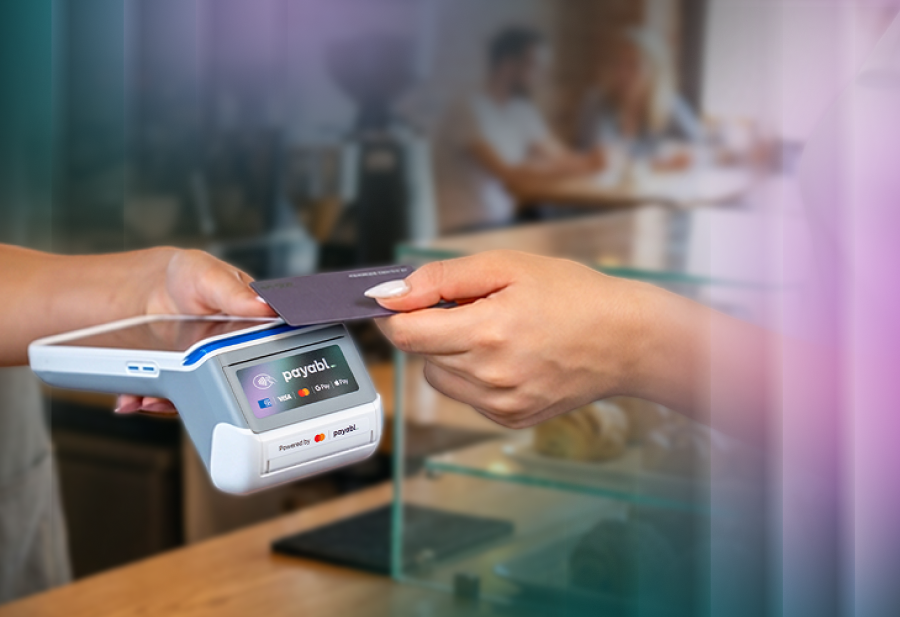
Merchant services for small business are the tools and agreements that let a company accept card and digital payments and get that money into its bank account.
In practice, that means a way to take payment at the counter or online, a provider that moves the funds through the card networks, and a place for the money to land. If you run a shop, a cafe, a salon, or a growing online store, merchant services are the plumbing behind every "payment approved" message your customers see.
Think of it like the postal system for money. Your customer drops a "letter" (their card details) into a postbox (your card reader or checkout). A sorting network (Visa, Mastercard) routes it, the sender's bank confirms there are funds, and a few working days later the payment is delivered to your account. Merchant services are the postal service that makes all of that happen reliably, every single day.
What are merchant services?
Merchant services is the umbrella term for everything a small business needs to accept card and cashless payments. It usually bundles three things: a way to capture the payment, a payment processor that talks to the banks and card networks, and a merchant account (or a modern equivalent) where funds settle before reaching your business account.
At a minimum, a small business payment solution gives you:
- Payment acceptance at the point of sale, online, or both.
- Payment processing that authorises, clears, and settles each transaction.
- A settlement route that deposits your takings, minus fees, into your account.
- Security and compliance, so card data is handled to PCI DSS standards.
How do merchant services work?
Every card payment runs through the same four-step journey, whether the customer taps in-store or checks out online. Understanding it helps you see exactly what you are paying for.
- Authorisation: the customer taps, inserts, or enters their card. The processor asks their bank whether the funds are there and the card is valid.
- Clearing: the card network (Visa, Mastercard, and others) passes the transaction details between the customer's bank and yours.
- Settlement: the money lands in your account, usually within one to two working days.
- Reconciliation: you see the payout, the fees, and any refunds or chargebacks in your dashboard.
For most small businesses the whole cycle is invisible and takes seconds at the till. The provider's job is to make it fast, secure, and predictable so you can focus on serving customers.
Online and in-person payments: one setup, every channel
The best merchant services for small business let you sell wherever your customers are, without stitching together separate systems. That means a single provider covering online checkout for your website or booking page, POS payments for a fixed till or countertop terminal, and Tap to pay so you can accept contactless cards and phones directly on a compatible smartphone, with no extra hardware.
With payabl., these channels run through one omnichannel setup, so a customer who buys online and later visits your shop is the same customer in the same dashboard. That is the difference between "taking cards" and running a joined-up business.
How much do merchant services cost for a small business?
Merchant services costs for a small business are built from a few standard components, and the honest answer is that the headline rate is never the whole story. Here is what actually makes up the price.
| Fee component | What it is | Typical range |
| Transaction fee | A percentage (and sometimes a flat pence amount) per sale | ~0.3% to 2.9% + a small fixed fee |
| Interchange | Paid to the customer's card-issuing bank | Set by the card networks |
| Scheme fee | Paid to Visa, Mastercard, and others | Set by the card networks |
| Monthly / account fee | Platform or gateway access | GBP 0 to ~30 |
| Hardware | Card reader or terminal | GBP 0 to a few hundred |
| Chargeback fee | Charged when a customer disputes a payment | Per-dispute fee |
Two pricing models dominate. Blended pricing gives you one simple rate for every card, which is easy to predict. Interchange-plus shows the interchange, the scheme fee, and the provider's margin separately, which is more transparent and often cheaper at higher volumes. The right choice depends on your ticket sizes and monthly turnover, not on whichever number looks smallest in an advert.
A quick reality check: a "1.5%" rate with a monthly fee, slow settlement, and a chargeback fee can cost a small business far more than a slightly higher rate with none of those extras.
Always compare the total cost of accepting a payment, not the first percentage you see.
How to choose the best merchant services provider
The best merchant services provider for a small business is the one that fits your sales channels, settles quickly, prices transparently, and supports you when a payment fails. Use this checklist before you sign anything:
- Channels covered: does it handle online, POS, and Tap to pay from one account?
- Total cost: transaction rate, monthly fees, hardware, and chargeback fees combined.
- Settlement speed: how fast does money reach your account?
- Approval rates: higher acceptance means fewer lost sales at checkout.
- Payment methods: cards plus the local and alternative methods your customers use.
- Compliance: PCI DSS handled for you, so security is not your problem to solve.
- Support and contracts: real human help, and no punishing lock-in.
payabl. is a financial technology provider offering payments and business accounts for businesses of all sizes. Small businesses can accept online and in-person payments, open multi-currency business accounts, issue virtual and physical cards, and reach customers through 300+ local and alternative payment methods, all from one provider. For a small business owner, that means fewer tools to manage and one partner accountable for getting you paid.
Do you need a merchant account?
A traditional merchant account is a special holding account where card takings sit before they settle into your business bank account. Many modern providers now roll this into a single setup, so you no longer have to arrange a separate merchant account, a gateway, and a bank account yourself. For a small business, that consolidation removes paperwork and speeds up going live, often from weeks to days.
Small business merchant services power growth, not just payments
Choosing merchant services for small business is not a back-office chore; it is one of the few decisions that touches every sale you will ever make. The right setup lowers the cost of each transaction, gets your money to you faster, and lets a customer pay however they want, online, at the counter, or with a tap. The wrong setup quietly leaks revenue through failed payments, slow settlement, and fees you did not see coming.
The takeaway is simple. Treat payment acceptance as core infrastructure, compare providers on total cost and total capability rather than a single headline rate, and pick a partner that grows with you across every channel. Do that, and merchant services stop being a mystery and become one of your small business's quiet advantages. Made simple, merchant services are not overhead; they are the engine that turns customers into paid-in revenue.
Frequently asked questions
What are merchant services for a small business?
Merchant services for a small business are the tools and agreements that let the business accept card and digital payments and receive the funds in its account. They typically combine payment acceptance, payment processing, and settlement, plus security to PCI DSS standards.
How do merchant services work?
A payment is authorised by the customer's bank, cleared through the card network, and then settled into the business's account, usually within one to two working days. The provider manages this cycle so each sale is fast and secure.
How much do merchant services cost for a small business?
Costs are made up of a transaction fee, interchange and scheme fees set by the card networks, and sometimes a monthly fee, hardware cost, and chargeback fees. Compare the total cost of accepting a payment rather than a single headline rate.
Do I need a merchant account to accept card payments?
Not always. Many providers now combine the merchant account, payment gateway, and settlement into one setup, so a small business can start accepting payments without arranging each piece separately.
What is the difference between a merchant account and payment processing?
A merchant account is where card takings are held before settling to your bank account, while payment processing is the service that authorises and clears each transaction. Modern providers usually deliver both together.
Can a small business accept both online and in-person payments?
Yes. With an omnichannel provider like payabl., a small business can take online checkout payments, POS payments, and Tap to pay from one account and one dashboard.
What is Tap to pay?
Tap to pay lets a business accept contactless cards and phones directly on a compatible smartphone, with no separate card reader. It is a low-cost way for small businesses to take in-person payments anywhere.
How do I choose the best merchant services provider?
Compare providers on channels covered, total cost, settlement speed, approval rates, supported payment methods, PCI DSS compliance, and quality of support. The best provider is the one that fits how your business actually sells.