Choosing the best payment processor for recurring payments protects your revenue and your relationships with the people who pay you. This article walks through the core evaluation criteria, from pricing and payment methods to security, support, and how each option fits into your billing system. You’ll see how different providers handle subscription models, payment schedules, and automation so you accept payments reliably instead of chasing them. By the end, you’ll know how to match a recurring payment provider to your business type, growth plans, and operational needs with more confidence.
Why choosing the right recurring payment provider matters
Your choice of provider shapes how predictable your revenue feels, how smooth each renewal runs, and how much manual work your team carries. The right partner keeps cash flow stable, reduces failed charges, and supports the way your business grows instead of limiting it. Before you look at features or price tags, it helps to understand what sits behind the label, how it fits different business models, and what can go wrong if you pick a poor fit.
What “recurring payment provider” means: gateway, processor, platform, or all-in-one
A recurring payments provider might be a payment gateway, a processor behind the scenes, a full billing platform, or an all-in-one solution that combines these roles. Some focus on routing and authorising card and bank transactions. Others add subscription management, invoicing, reporting, and dunning tools on top. Understanding which parts of the stack they cover helps you see what you still need to build or connect yourself.

The role of recurring payments in subscription and membership business models
Subscriptions, memberships, retainers, and payment plans all rely on recurring billing instead of one-off charges. That model supports more predictable revenue and creates a tighter link between ongoing value and ongoing payments. It also changes how you think about upgrades, renewals, and cancellations because each billing cycle affects lifetime value. A provider that understands these patterns can support growth instead of forcing awkward workarounds.
Risks of a poor provider: revenue loss, churn, payment failures, customer friction
A weak setup can turn every renewal into a risk instead of a routine event. You may see more declines, confused buyers, and support tickets when customers payments don’t go through or terms feel unclear. Over time, that leads to higher churn, more manual follow-up, and gaps in your reporting. Choosing carefully at the start reduces those risks and keeps your focus on value, not firefighting.
Key criteria to evaluate a recurring payment provider
When you review options, you’re not only picking tools. You’re choosing the best recurring payment system for your model, your regions, and your growth plans. You also weigh how each partner handles subscription payment services and day-to-day renewals inside your billing system. Every choice needs to line up with the way you run your merchant account in practice.
Payment methods and global reach
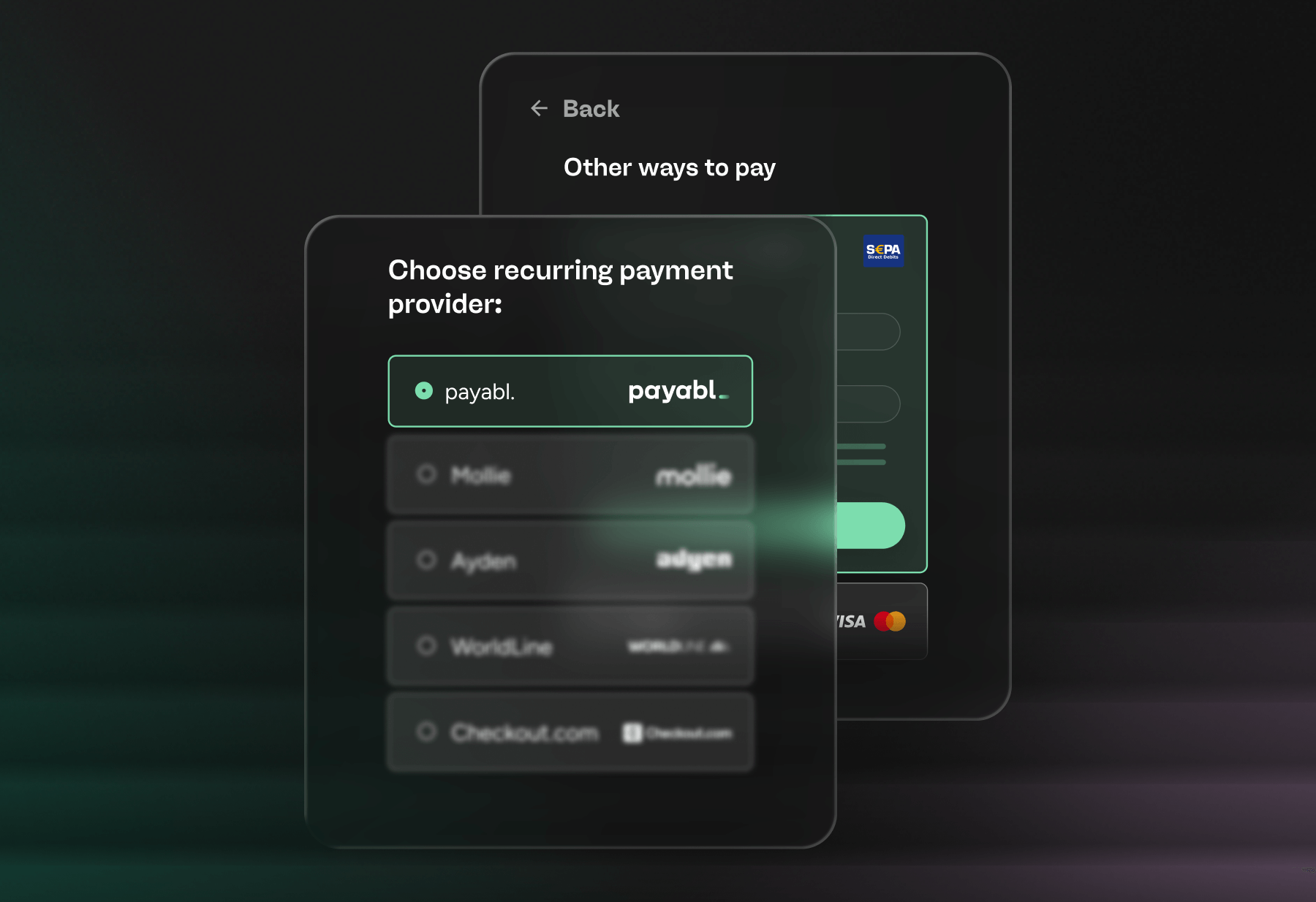
Your provider should match the preferred payment methods of the people who pay you now and in your next markets. With payabl., you plug into one payment service and cover cards, account-to-account options, and local methods through a single connection.
- Cards for subscriptions and repeat buyers
Accept credit card payments across major schemes so renewals feel familiar and fast for payers. - Bank debits for stable long-term relationships
Use direct debit payments and SEPA Direct Debit for euro-denominated recurring charges that need lower fees and strong retention. - Wallets and PayPal for digital-first journeys
Offer digital wallets and PayPal payments for buyers who expect one-tap checkouts on web and mobile. - Local methods and currencies for cross-border growth
Support international payments with regional options and multi-currency settlement so you don’t manage separate setups for each country.
If you want one gateway to standardise methods across regions, speak with payabl. about mapping your current mix into payabl.gateway and planning your next markets.
Security, compliance and data vaulting
A strong recurring setup starts with protection of payment details and clear controls around payment information.
payabl. keeps data inside PCI-compliance boundaries and uses secure hosted flows, tokens, and SDKs so card data doesn’t sit on your own servers. You gain card vaulting and 3-D Secure handling in one place, with callbacks and notifications for your systems. That approach reduces risk while you scale subscriptions and higher volumes.
If you want to step up security without slowing checkout, connect with payabl. to review your current setup and migration path.
Subscription and billing features
Recurring revenue needs more than simple one-off charges. You need subscription payment services that support trials, fixed or usage-based plans, and clear rules for renewals and changes.
payabl. underpins subscription business models with tools for recurring payments, SEPA Direct Debit, and flexible gateway routing, so billing aligns with how you package value. The platform supports collections while your own systems track plans, periods, and metrics.
If you’re designing new packages or moving from manual invoicing, work with payabl. to map those products into a recurring structure.
Failed payments and dunning / retry logic
Even strong setups see failed payments, so your provider’s billing logic matters.
payabl. supports retries, callbacks, and mandate-based methods such as SEPA Direct Debit that reduce card-related drops and improve revenue recovery. You receive real-time status updates and can trigger your own emails, in-app prompts, or support workflows at each step. That keeps renewals on track and reduces manual chasing.
Flexibility and integration
Your provider should fit into your existing tools instead of forcing a rebuild. The best recurring payment processing setups integrate cleanly with billing engines, CRMs, analytics stacks, and tax or invoicing platforms.
payabl. offers hosted payment pages, a Web SDK, mobile SDKs, and direct APIs so merchants plug in at the right depth and keep control of subscription management in their own systems.
If you’re planning a new architecture or refactoring legacy code, talk to payabl. early and design an integration path that matches your roadmap.
Pricing and fees
Cost only makes sense in context. You need clear pricing models that line up with your margins, volumes, and risk profile. payabl. works with merchants to unpack each cost driver before they commit.
- Core processing economics
Understand transaction fees by scheme, method, and region so you see the true cost per payment type. - Fixed and platform costs
Review monthly fees and any product-based charges in the same view as your expected volume. - International and cross-border costs
Check how FX, cross-border markups, and regional routing affect your effective rates. - Volume and growth levers
Align discounts and tiers with your growth plan so unit costs improve as you scale.
If you’re comparing offers or preparing to renegotiate, invite payabl. to review your statements and explore a fee structure that matches how your business really processes payments.
Customer experience — checkout UX, customer self-service, transparency
Recurring success depends on how it feels to pay. payabl. supports branded checkout flows, payment links for invoices and one-off charges, and mobile payments through SDKs and wallets, so payers complete flows quickly on any device.
Merchants gain options for a customer self-service portal and mandate views, where people can review plans and details. You also trigger payment reminders and notifications from your own systems using gateway callbacks.
If you want renewals to feel effortless, collaborate with payabl. on a checkout and self-service journey that matches your brand.
Scalability and support — growth readiness, global compliance, reporting tools
You need a partner that grows with you. The best recurring payment platform supports more methods, more markets, and more complex reporting without a full redesign.
payabl. operates across multiple European jurisdictions, supports over 300 local and global methods, and provides dashboards and callbacks so you collect payments with clear oversight. Merchants get high-touch support while they expand into new regions or launch new subscription lines.
If you’re planning the next stage of growth, bring payabl. into your planning and stress-test your recurring setup before you scale.
How to match provider choice to your business type
The best recurring payment processor for your business depends on how you sell, where you operate, and how fast you plan to grow. Some merchants need simple subscription payment gateways that go live fast with minimal setup. Others need deeper control of risk, data, and automation as they accept recurring payments across markets and channels. This section shows how to align provider choice and subscription plans with the realities of your business type and how payabl. supports each stage.
Small businesses and startups: cost-effective, low setup friction
Smaller teams need recurring payments that are simple to launch and maintain. payabl.gateway gives you hosted pages, plugins, and lightweight integrations so you move live without a large engineering team. You use the best payment gateway for recurring billing as a foundation for a reliable revenue stream, not a source of extra admin.
Merchants accept payments through card, local methods, or a virtual terminal while keeping reporting in one place. payabl. supports different payment options and payment models so you start with a lean setup and adjust as your volumes grow.
If you’re launching or formalising your first subscriptions, talk to payabl. about a gateway plan that fits your size today and your roadmap for tomorrow.
Growing SaaS / subscription businesses: flexibility, proration, dunning
SaaS and digital subscription businesses need a provider that supports change as a constant. You shift prices, add tiers, and adjust billing logic as you refine your offer.
payabl. supports recurring collections for subscription services through cards and SEPA Direct Debit, so your right subscription payment gateway works for trials, long-term contracts, and usage-based add-ons. Billing runs through gateway events and callbacks that connect into your own subscription engines and CRMs. That setup supports revenue growth without forcing you to rebuild core systems.
If you’re scaling MRR and want more control over retries, mandates, and flows, work with payabl. to design an integration that fits your stack.
Global companies: multi-currency, compliance, payment-method variety
Larger and cross-border merchants need a provider that treats geography as a feature, not a barrier. payabl. combines acquiring, payout services, and multi-currency business accounts so you handle incoming and outgoing flows in one ecosystem. Your billing process draws on rich payment data from the gateway, while dashboards and callbacks support local reporting and audits.
The platform helps you manage transaction fees across schemes, regions, and payment methods instead of treating them as a black box. payabl. also supports strong controls for customer data, security, and SEPA Direct Debit for recurring euro collections.
If you’re planning or accelerating international expansion, bring payabl. into your planning and stress-test your global structure in advance.
High-risk or niche industries: fraud mitigation, fallback methods, compliance
High-risk and niche sectors need tighter control over risk, workflows, and how funds move. payabl. pairs gateway controls with risk tools, 3D Secure logic, and monitoring so you work with the best payment processor for subscriptions in your category.
Key focus areas include:
- Fraud rules that reflect your sector and chargeback patterns.
- Fallback methods and routing to keep customers payments flowing when specific channels face higher scrutiny.
- Clear tax compliance and reporting support through data exports and callbacks.
- Strong KYC, AML, and underwriting processes that match your regulatory environment.
If you operate in complex verticals, connect with payabl. to review your current flows and design a setup that balances approval rates, risk controls, and regulatory expectations.
Best practices for implementing recurring payments
Strong recurring setups depend on more than technology. You need clear processes, the right billing software, and habits that keep recurring transactions predictable over time. These practices protect customer payments and reduce the manual work your teams carry.
Transparency and customer communication
Set clear expectations before the first charge. Explain automatic payments in plain language, including what will be billed and when. Publish simple policies on refunds, renewals, and cancellation. Keep billing frequency visible on checkout pages, in account settings, and in confirmation messages. Use automated email notifications before renewals and after each charge. Give people a fast way to change details or cancel without contacting support. This approach supports trust and customer retention over the long term.
Secure payment data handling and compliance
Treat payment information as the most sensitive data you hold. Limit who can see full details and log every access. Use encryption in transit and at rest, plus tokenisation instead of storing raw card numbers. Rely on recurring payment gateways that operate within strong PCI-DSS boundaries. Keep your own environment out of scope wherever possible. Review policies and access rights on a regular schedule. Document how you collect, store, and delete data in line with regional privacy rules.
Optimise subscription lifecycle management
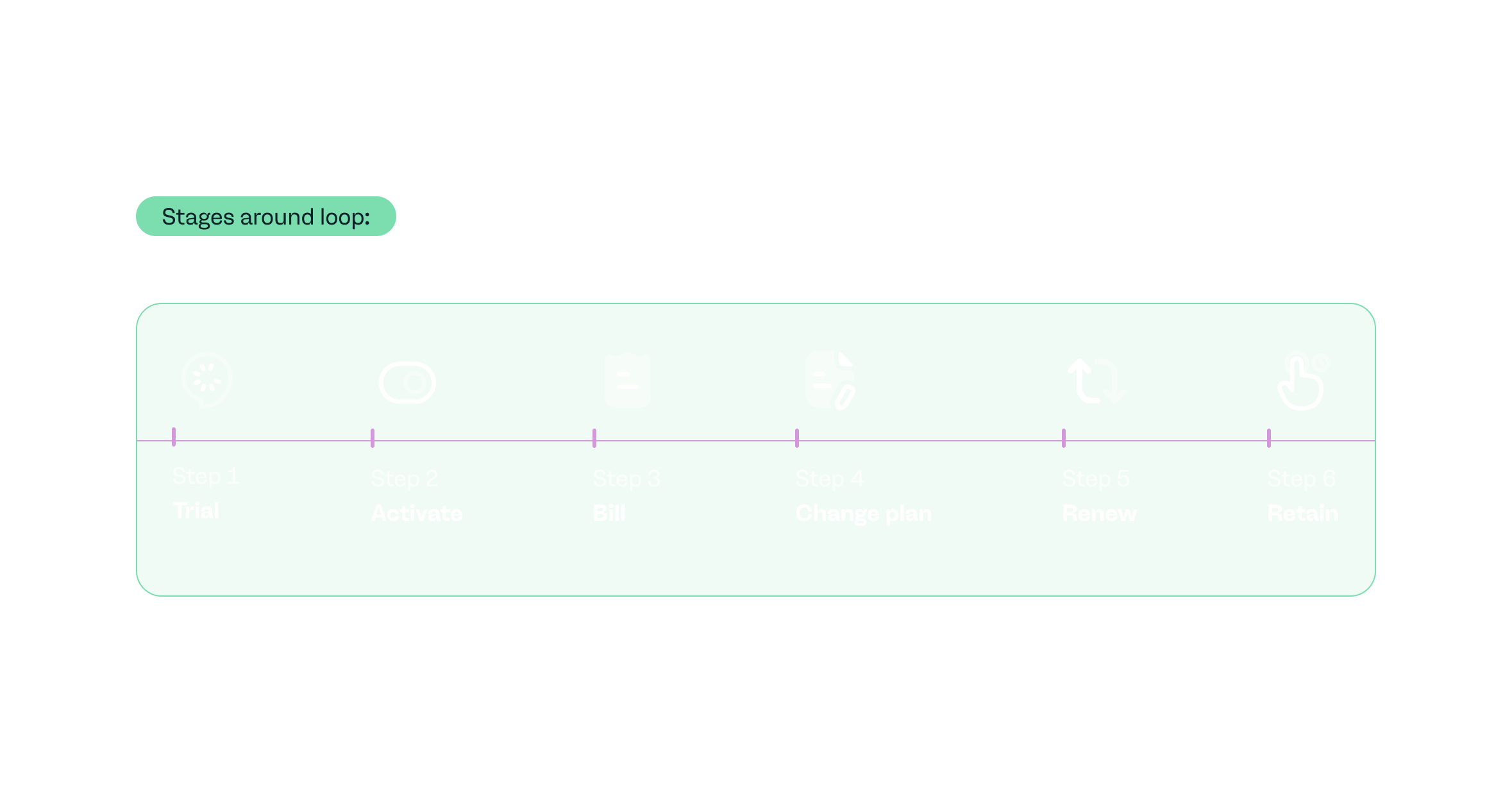
Subscriptions change over time, so your processes must adapt. Use subscription management platforms or in-house tools that track each plan from trial to renewal. Offer flexible plans that support upgrades, downgrades, and add-ons without manual fixes. Make it easy to manage subscriptions from a single view for both teams and payers. Handle changes with rules for proration that feel fair and easy to explain. Keep subscription details, such as next charge date and amount, visible in every key touchpoint.
Handling payment failures: retries, dunning, fallback methods
Plan for issues before they happen. Define how you treat a subscription payment that does not go through on the first attempt. Use reason codes to see whether failures relate to insufficient funds, expired cards, or technical errors. Create retry rules that space attempts over time instead of hammering cards. Combine those rules with clear emails or in-app prompts that explain what to do next. Offer fallback methods such as bank debits or alternative rails for high-value or at-risk accounts.
Offer multiple payment options: credit cards, bank debit, wallets, local payment methods
Different buyers trust different rails, so range matters.
- Support debit cards and credit cards for familiar online checkouts.
- Offer pulls from bank accounts for larger or long-term contracts.
- Route transactions through modern payment processing setups that handle regional rules.
- Add payment systems that match local expectations in each market.
- Include wallets such as Google Pay and Apple Pay for faster mobile journeys.
This mix reduces drop-off at checkout and makes it easier for people to stay on the plan that suits them.
How to decide: step-by-step checklist
- Clarify your business model and goals
Define how you sell today and what you want to support next. Note whether you focus on subscriptions, memberships, usage-based billing, or payment plans. - Map your payment flows and systems
List how payments start, where they get authorised, and which tools record them. Include billing software, CRM, finance tools, and any existing gateways. - Set your must-have capabilities
Decide your minimum needs for payment methods, currencies, settlement regions, and recurring transactions. Separate “must have” from “nice to have.” - Define your risk, security, and compliance needs
Document your requirements around fraud controls, PCI scope, data storage, and regulatory obligations in each region. - Review payment methods and global reach
Check if each provider supports the cards, bank debits, wallets, and local methods your buyers expect in each market. - Evaluate subscription and billing features
Confirm support for recurring billing, proration, upgrades and downgrades, trials, and clear handling of changes over time. - Assess failure handling and dunning
Ask how the provider manages failed payments, retries, and notifications. Look for clear events or webhooks you can plug into your own flows. - Check integration options and effort
Compare APIs, SDKs, and plugins. Estimate the effort to connect your systems and keep them in sync. - Compare pricing and total cost
Look at transaction fees, cross-border costs, monthly charges, and any extras. Model these against your current and forecast volumes. - Review customer experience and self-service
Walk through the checkout, renewal, and cancellation journeys. Make sure people can see and manage their customer payments easily. - Validate reporting, support, and scalability
Confirm you get the dashboards, exports, and support coverage you need now and as you grow. - Shortlist and run a pilot
Narrow to one or two providers. Run a limited live test with real buyers and real data before you commit fully. - Choose and plan your rollout
Select the provider that fits your model, numbers, and roadmap best.
If you want a partner focused on recurring payments and global growth, bring payabl. into your shortlist discussion and design your rollout together.
Final thoughts
Choosing the best subscription payment gateway shapes how stable your revenue feels and how easy it is for people to keep paying you. The right partner supports your payment methods, recurring models, and global growth without adding complexity for your teams.
If you want a tailored view of what this could look like for your business, talk with payabl.’s team about a consultation, demo, or custom quote. Direct all questions and requests through our contact form and we’ll help you design a setup that fits your goals.
Frequently asked questions (FAQ)
How can I handle recurring payments?
Handle recurring payments by combining clear billing rules with a reliable provider. Set when and how often you’ll charge, how you’ll notify people, and what happens if a payment fails. Use one of the popular payment gateways or platforms that support tokens, retries, and webhooks so your systems stay in sync. Keep renewal dates visible and give people a simple way to update their details or cancel.
What is the safest way to pay recurring bills?
The safest way to pay recurring bills is through secure, encrypted channels with a trusted provider. Use methods that support strong authentication and avoid sharing full card details by email or chat. Many businesses issue recurring invoices or use secure customer portals so people can confirm amounts and dates before they pay. Always check that the payment page URL is correct and that the provider explains how they protect your data.
What is subscription payment processing?
Subscription payment processing is the set of systems and rules that handle repeated charges for ongoing access to a product or service. It covers storing payment details securely, running charges on a schedule, managing upgrades or downgrades, and handling expiries or failures. Good setups link the gateway, billing tools, and analytics so teams see the full picture of each subscription.
Types of subscription payment models
Common subscription payment models include flat-rate pricing where everyone pays the same fee on a schedule, tiered plans with different levels of features, and usage-based models that bill based on consumption. Some businesses mix these into hybrid models, such as a base fee plus usage on top. Others use prepaid bundles or credit systems that renew when balances run low. The right model depends on how your product delivers value over time.