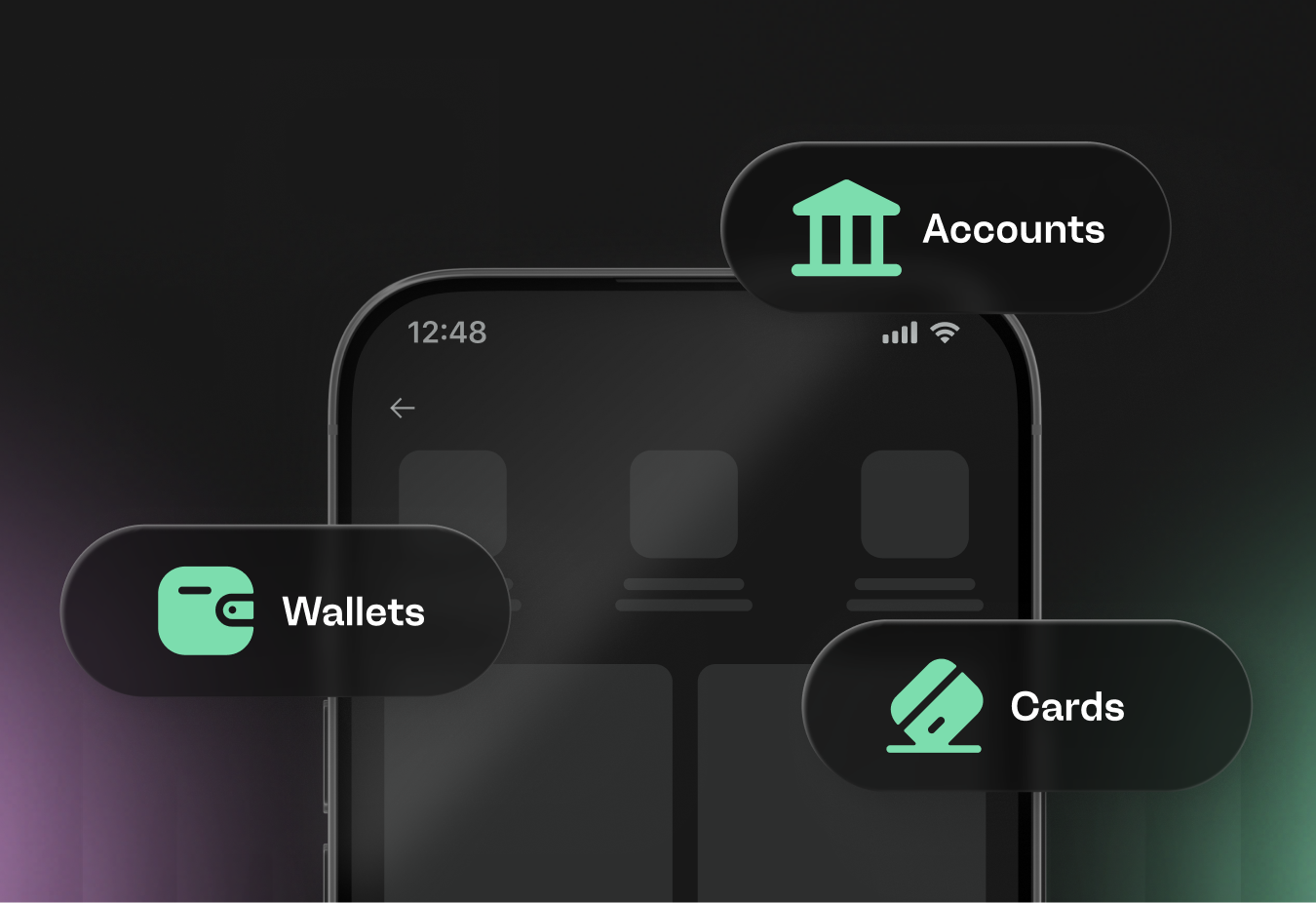
Embedded finance is the integration of financial services, such as payments, accounts, cards, and lending, directly into the products of non-financial companies, so users never leave the platform to transact. For a platform, a SaaS company, or a fintech, it is the difference between sending customers elsewhere to handle money and becoming the place where their money actually moves.
This guide explains what embedded finance is, how it works, the main types, real examples, and how to choose an embedded finance platform, all from the point of view of the business offering it.
Think of it like a well-run hotel. A guest does not leave the building to eat, exchange currency, or book a taxi; the hotel brings those services to the front desk. Embedded finance does the same for software: instead of pushing users out to a bank or a separate payment page, the platform brings payments, accounts, and financing to where the customer already is.
What is embedded finance?
Embedded finance is an umbrella term for financial services delivered natively inside a non-financial platform through a fintech partner's technology, usually via APIs. Rather than building a bank or holding every licence itself, a platform plugs in ready-made financial products and offers them under its own brand and inside its own user journey.
In practice, embedded finance turns any software company into a financial services distributor. A booking platform can offer payments and payouts; a vertical SaaS tool can offer business accounts and cards; a marketplace can offer embedded lending to its sellers. The financial product is no longer a separate destination, it is a feature.
How does embedded finance work?
Embedded finance works by connecting a platform to a licensed financial partner through APIs, so the platform can offer regulated financial products without becoming a bank. The partner supplies the licence, compliance, and infrastructure; the platform supplies the customer relationship and the user experience.
A typical flow: (1) a platform integrates a provider's embedded finance API; (2) the provider handles KYC, onboarding, safeguarding of funds, and settlement; (3) the customer sees payments, an account, a card, or financing appear natively, branded as the platform's own; (4) the platform earns from processing fees, interchange, or a share of lending, while the provider absorbs regulatory and (for lending) credit risk.
This has scaled because the hard parts, licensing under PSD2, holding an e-money licence, and building payment rails, are now available as infrastructure. The platform focuses on distribution; the partner focuses on compliance.
The main types of embedded finance
Embedded finance is not a single product. These are the five most common embedded finance solutions a platform can offer.
Embedded payments
Embedded payments let customers pay inside the platform without redirection, giving control over checkout across online, in-store, and mobile, and creating revenue through processing fees. With payabl. this spans the full omnichannel journey: accept online payments, in-person and POS payments, and Tap to pay on a phone.
Embedded accounts and banking
Embedded banking lets users hold, receive, and send money from an account inside the platform, meaning faster access to funds and easier reconciliation. payabl. offers multi-currency business accounts platforms can extend to their users.
Embedded cards (card issuing)
Card issuing gives users branded virtual or physical cards linked to their account, with spending limits and instant supplier payouts, while the platform earns interchange. payabl. supports virtual and physical cards.
Embedded lending and embedded financing
Embedded lending, or embedded financing, offers credit inside the platform at the moment of need. Because the platform holds data on revenue and activity, it can approve funding faster than a traditional bank. This covers SMB capital advances to consumer buy now, pay later (BNPL).
Embedded insurance
Embedded insurance places cover at the point of sale, for example travel insurance during a flight booking. Relevance and timing lift conversion sharply.
Embedded finance vs open banking vs Banking as a Service
The main difference between embedded finance and open banking is scope: open banking is the regulated data-sharing infrastructure, while embedded finance is the full financial product experience built on top of it. Banking as a Service (BaaS) sits in between as the licensed toolbox.
| Concept | What it is | Primary role | Example |
| Open banking | Regulated sharing of bank data & payment initiation via APIs (PSD2) | Data access & account-to-account payments | Pay by Bank, account aggregation |
| Banking as a Service (BaaS) | Licensed infrastructure letting non-banks offer regulated products | Provides licence, compliance, rails | Provider enabling accounts & card issuing |
| Embedded finance | Financial products delivered natively inside a non-financial platform | The end-user product experience | Payments, accounts, cards, lending in a SaaS tool |
A simple way to remember it: open banking is the plumbing, BaaS is the toolbox, and embedded finance is the finished room the customer actually uses.
Embedded finance examples
Embedded finance examples are everywhere once you know what to look for:
- Ride-hailing and delivery apps with in-app payment and instant driver payouts.
- Ecommerce platforms offering merchant financing based on sales history.
- Vertical SaaS tools (hospitality, beauty, healthcare) adding payments, accounts, and cards.
- Marketplaces splitting and routing payouts to thousands of sellers automatically.
- Checkouts offering BNPL at the moment of purchase.
- Super-apps such as WeChat and Grab, where payments, banking, and lending live in one app.
Why embedded finance matters for platforms, SaaS and fintechs
Embedded finance matters because it turns a software subscription into a financial ecosystem, for the three audiences most able to act on it.
- For platforms: new revenue lines beyond subscriptions, payment fees, interchange, and a share of lending.
- For SaaS companies: deeper stickiness. Running payments, accounts, and cards through your product cuts churn.
- For fintechs: distribution. Reach end users through the platforms they already use daily.
The strategic prize is the same across all three: become indispensable. A tool people log into is useful; a tool that moves their money is essential.
How to choose an embedded finance platform
Choosing an embedded finance platform comes down to five questions a platform, SaaS, or fintech should ask:
- Coverage: full omnichannel journey (online, POS, Tap to pay) or one channel only?
- Licensing and compliance: does it hold the licences (e-money, PSD2 authorisation) so you do not have to?
- Product breadth: payments, accounts, cards, and financing from one integration?
- Geographic reach: does it cover your UK and European markets, with local and alternative payment methods?
- Economics: transparent revenue share, and does the provider absorb credit and regulatory risk?
As a financial technology provider offering payments and business accounts for businesses of all sizes, with online and in-person payments, multi-currency accounts, virtual and physical cards, and 300+ local and alternative payment methods, payabl. is built for exactly this. If you are weighing up your options, [talk to our payments team].
The embedded finance market: size and growth
The embedded finance market is one of the fastest-growing categories in financial services. Grand View Research estimated the market at around $83bn in 2023 and projects roughly $588bn by 2030. In Europe, McKinsey estimated embedded finance generated EUR20-30bn in revenue in 2023, about 3% of total banking revenues.
For platforms in the UK and Europe, the takeaway is timing. The infrastructure is mature, adoption is accelerating, and first movers in each vertical are still claiming the ground.
Embedded finance is the new operating system for platform revenue
Embedded finance has moved from a fintech buzzword to a practical growth strategy for any platform, SaaS company, or fintech that touches a transaction. By bringing payments, accounts, cards, and lending inside the user journey, you stop sending customers away to handle their money and start becoming the place where it happens. That shift opens new revenue streams, makes your product harder to leave, and turns everyday software into essential financial infrastructure.
The providers and platforms that internalise this now, while the UK and European markets are still forming, will define the next decade of digital finance. Embedded finance is not a feature you add on the side; it is fast becoming the operating system for how modern platforms earn.
Ready to build embedded finance into your platform? Talk to our payments team and start turning everyday transactions into new revenue.
Frequently asked questions
What is embedded finance?
Embedded finance is the integration of financial services, such as payments, accounts, cards, and lending, directly into the products of non-financial companies, so users can transact without leaving the platform.
What are examples of embedded finance?
Examples include in-app payments in ride-hailing apps, merchant financing on ecommerce platforms, business accounts and cards inside vertical SaaS tools, buy now, pay later at checkout, and super-apps like WeChat and Grab.
How does embedded finance work?
Embedded finance works by connecting a platform to a licensed financial partner through APIs. The partner supplies the licence, compliance, and infrastructure, while the platform offers the products natively under its own brand.
What is the difference between embedded finance and open banking?
Open banking is the regulated infrastructure for sharing bank data and initiating payments, while embedded finance is the full financial product experience, including payments, accounts, cards, and lending, built on top of it.
What is the difference between embedded finance and embedded payments?
Embedded payments are one type of embedded finance. Embedded payments cover paying inside a platform, while embedded finance also includes accounts, cards, lending, and insurance.
Is embedded finance the same as Banking as a Service (BaaS)?
No. BaaS is the licensed infrastructure that lets non-banks offer regulated products, whereas embedded finance is the customer-facing experience delivered on top of that infrastructure.
Who uses embedded finance?
Embedded finance is used by platforms, SaaS companies, marketplaces, and fintechs that want to offer payments, accounts, cards, or financing to their customers without becoming a bank.