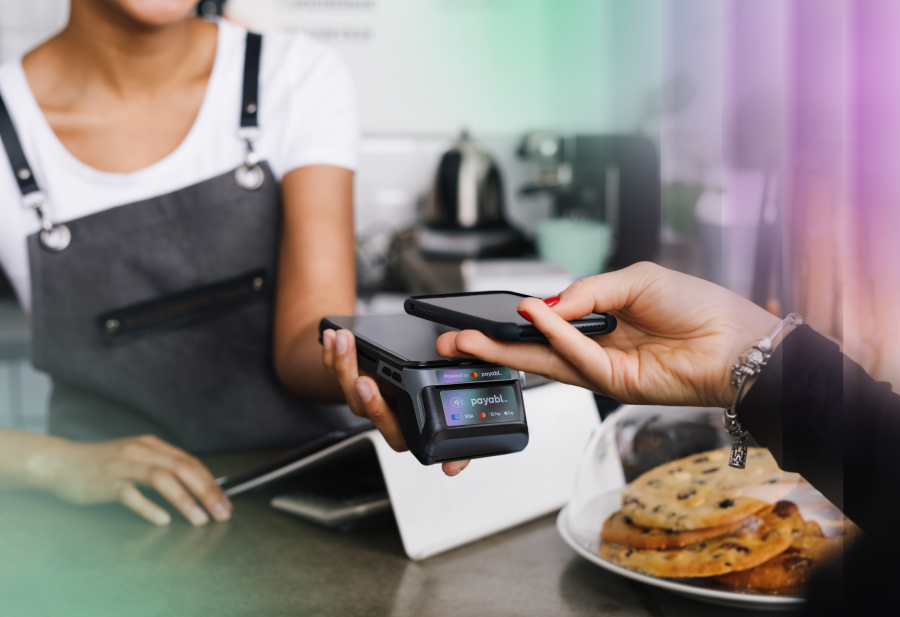
Running a small business means wearing a dozen hats, and one of the most important is deciding how customers pay you. A card machine for small business owners is the device that turns a tap, chip, or swipe into money in your account, and choosing the wrong one can quietly cost you hundreds of pounds a year in fees, downtime, or missed sales.
Think of a card machine like a pair of work boots. The cheapest pair might get you through a quiet week, but if you are on your feet all day, every day, you need something built for the job: comfortable, reliable, and able to keep up as your business grows. The same logic applies to payment hardware: the right card machine should fit how you actually trade today, and be flexible enough to grow with you tomorrow.
This guide breaks down the types of card machines available, what they really cost, how to compare providers, and how a card machine fits into your wider payment setup, whether you run a shop, a stall, a van, or a subscription service with occasional in-person sales.
What is a card machine and how does it work?
A card machine, also called a card reader or payment terminal, is a device that securely captures a customer's card or mobile wallet details, sends the transaction to the card network (Visa, Mastercard, and others) for authorisation, and confirms the payment within seconds.
Here is what happens in a typical tap-to-pay transaction:
- The customer taps their card, phone, or smartwatch on the terminal.
- The card machine encrypts the payment data and sends it to your payment provider.
- The provider routes the request to the card network and the customer's bank for authorisation.
- The bank approves or declines the transaction, usually within one to three seconds.
- Funds are settled into your business account, typically within one to three working days.
Every card machine relies on the same underlying standards: EMV chip technology for secure card reads, NFC (near-field communication) for contactless and mobile wallet payments such as Apple Pay and Google Pay, and PCI DSS compliance to keep cardholder data secure.
A merchant does not need to understand the cryptography behind this, only that a compliant, well-supported provider is handling it correctly on their behalf.
What types of card machines are available for small businesses?
Small business card machines generally fall into four categories, and the right one depends on how and where you sell.
| Type | Best for | Typical cost | Connectivity |
| Portable card machine | Cafés, restaurants, retail counters | £19 to £49/month or one-off £29 to £99 | Wi-Fi or Bluetooth to a base unit |
| Mobile card reader | Market stalls, deliveries, tradespeople | One-off £19 to £59, pay-as-you-go fees | Bluetooth to a smartphone app |
| Countertop card machine | Fixed retail tills, salons | £15 to £35/month | Ethernet or Wi-Fi |
| Tap to pay on smartphone | Sole traders, pop-ups, service providers | Often free hardware, per-transaction fee | Built into a compatible smartphone |
Tap to pay deserves special mention because it removes the hardware question entirely: it lets a merchant accept contactless card and mobile wallet payments directly on a compatible smartphone, with no separate terminal to buy, charge, or carry. For a sole trader visiting clients, or a market trader who wants a backup device, Tap to pay for small business owners is often the fastest way to start accepting cards with zero upfront hardware cost.
How much does a card machine cost for a small business?
The real cost of a card machine for small business owners is rarely just the device price. It typically includes:
- Hardware cost: a one-off purchase (£19 to £99) or a monthly rental (£15 to £49).
- Transaction fees: usually between 1.4% and 2.75% per card transaction, depending on card type (debit tends to be cheaper than credit) and provider.
- Monthly minimum fees: some providers charge a flat fee regardless of volume, others are fully pay-as-you-go.
- PCI DSS compliance fees: a small recurring charge some providers add to cover mandatory security compliance.
- Contract terms: rolling monthly, or long fixed-term contracts (12 to 48 months) that can be expensive to exit early.
A merchant processing £5,000 a month in card sales at a 1.75% fee pays roughly £87.50 a month in transaction costs alone, before hardware or monthly fees. That is why comparing headline transaction rates in isolation is misleading: a provider with a slightly higher percentage but no monthly fee and no lock-in contract can end up cheaper for a seasonal or lower-volume business.
Card machine vs card reader: is there a difference?
In everyday use, "card machine" and "card reader" are often used interchangeably, but there is a practical distinction worth knowing. A card reader is typically a smaller, app-connected device paired with a smartphone or tablet, aimed at mobile or low-volume sellers. A card machine (or terminal) is usually a standalone unit with its own screen, receipt printer option, and network connection, built for higher, steadier transaction volumes at a fixed or semi-fixed location.
Neither is universally "better." A food truck owner is usually better served by a compact card reader that pairs with their phone, while a busy retail counter benefits from a dedicated countertop card machine that does not depend on staff phone battery or signal.
What should a small business look for in a card machine provider?
When comparing providers, look past the headline price and check:
- Contract flexibility: rolling monthly terms protect you if your sales volume changes or you switch providers later.
- Settlement speed: how quickly funds actually reach your business account, which matters directly for cash flow.
- Approval rates: a provider with strong authorisation rates means fewer declined sales at the till, directly protecting revenue.
- Multi-channel support: can the same provider also support your online checkout and future in-app or subscription billing, so you are not managing three separate systems as you grow?
- Local and alternative payment methods: especially relevant if you serve international or tourist customers, where accepting the right card schemes and wallets can be the difference between a completed sale and an abandoned one.
- Support and hardware replacement: what happens if a terminal breaks during your busiest trading day?
This is where many small businesses discover that a card machine is not really a standalone decision. It is one piece of a wider payment setup that also includes online checkout, point of sale, and increasingly, Tap to pay.
payabl. supports this full omnichannel payment journey, from a card machine at the counter to a checkout page online, on one merchant account, so a growing business is not stitching together separate providers as it expands from one channel to several.
Do small businesses need a card machine if they already sell online?
Many subscription and SaaS businesses assume they only need an online checkout, but in-person moments still matter: trade shows, pop-up demos, in-person renewals, or simply a customer who prefers to pay face to face. A card machine for small business owners who are primarily online-first does not need to be complex. A lightweight mobile reader or Tap to pay on an existing smartphone covers occasional in-person transactions without adding a second contract, a second dashboard, or a second reconciliation headache, provided it connects to the same underlying merchant account as the online business.
A small business is choosing more than a device
Choosing a card machine for small business owners is really a decision about cash flow, customer experience, and how much friction sits between a customer wanting to pay and the money reaching your account. The best fit depends on where you sell, how much you process, and whether you need that machine to work alongside an online checkout today or in the future. A café needs speed at the counter, a market trader needs something that survives a rainy Saturday, and a SaaS company needs occasional in-person payments to feel just as seamless as a subscription renewal. Get that fit right, and a card machine stops being a piece of hardware and becomes a quiet, reliable part of how your business earns.