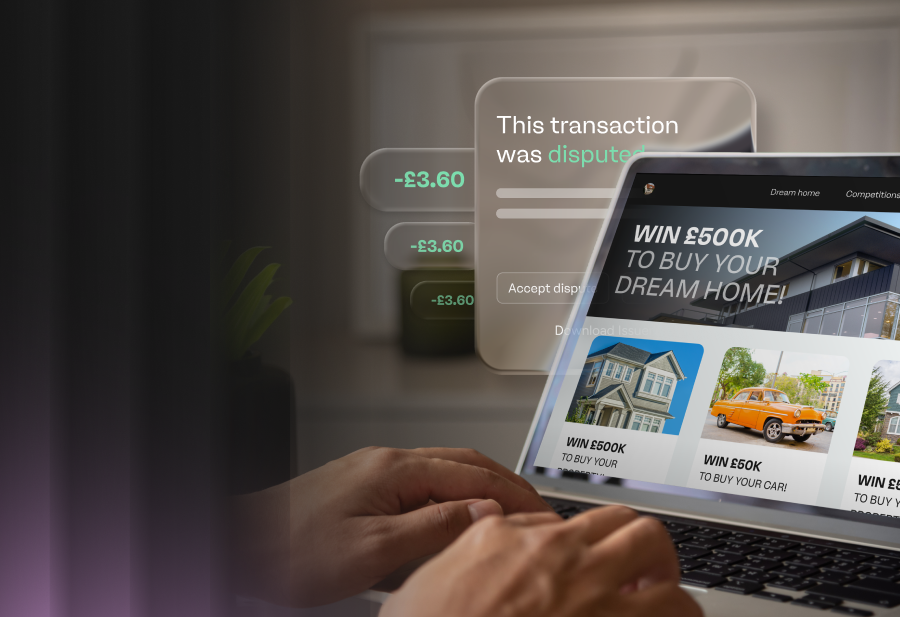
Prize competitions have become mainstream customer acquisition and revenue channels. They are high‑volume, card‑not‑present businesses that carry the same underlying payment economics as ecommerce or digital subscription businesses. For merchants operating competitions or selling into this segment, understanding why these models are popular and how their payment stacks work is now a practical necessity.
Why prize competitions attract so much spend
UK competition operators such as Omaze, BOTB and Elite Competitions sell paid entries into draws for cars, cash and luxury goods. These are framed as “competitions” or “free draws” with entry by post rather than regulated lotteries. Ticket pricing is designed for repeat behaviour: BOTB tickets often range from around 10p to £6, while others advertise entries from 49p upwards. Operators commonly guarantee that draws go ahead regardless of sell‑out, which helps build trust and encourages customers to treat entries as a regular discretionary spend rather than a lottery entry.
These companies are lean, digital‑first brands that rely on social media, advertising, affiliates and reviews rather than an established retail presence. This creates patterns that mirror ecommerce: fast purchase flows, stored details and repeat-purchase mechanics. For merchants, the lesson is that competitions scale when the “cost of entry” or implied entry fee feels low while the payment experience feels familiar and quick.
What competition payment stacks look like
Leading UK operators overwhelmingly rely on debit and credit cards and mobile wallets often routed through third‑party checkout providers. Omaze UK accepts cards along with Shop Pay, Apple Pay, Google Pay and PayPal, but limits PayPal and Apple Pay to one‑off entries rather than subscriptions. Elite Competitions promote exclusive use of Visa, Mastercard, Apple Pay and Google Pay. BOTB lets players store card details and use game credit as full or part payment for later entries.
By contrast, country-level games like the National Lottery and People’s Postcode Lottery lean heavily on Direct Debit and debit cards to take payment, with most players using Direct Debit to pay monthly. Credit cards are restricted in line with Gambling Commission policy, while operators treat e‑wallets as secondary options. Competition operators operate much like an ecommerce business with their payment mix, whereas lotteries lean more into subscription billing businesses.
Why cards and wallets dominate
Cards remain the default online payment method. They are familiar, widely stored in browsers and phones, and come with clear dispute rights. Wallets like Apple Pay and Google Pay go further — they cut field entry to zero. For a competition entry priced at £1 or less, that speed matters. Any friction at checkout like redirects or additional fields costs a disproportionate share of low-value transactions.
Direct Debit works for lotteries because the purchase pattern is fixed, recurring and predictable. Competition entries are impulsive and irregular. Cards and wallets match that behaviour. They support one-off purchases, stored-card repeat buys and subscription models without forcing buyers into upfront commitments.
What competition payments share with ecommerce
This mix of payment behaviours is where competition companies start to mimic ecommerce and iGaming businesses. Some operators separate one-off entries (where wallets and PayPal are accepted) from subscription memberships that rely on cards as recurring mandates. Others store card details and combine them with in-game credit, resembling card-on-file and wallet-balance models used in gaming and digital content.
The conversion patterns track closely too. iGaming data shows that optimised onboarding and fewer fields at checkout raise first-deposit rates by 17%–30% and deliver up to 25% more users completing their initial transaction. The same levers like 3DSecure and wallet availability apply directly to competition operators.
For merchants, the trade-off is straightforward: cards and wallets convert more buyers, more often, across more entry types. That flexibility sits higher than Direct Debit on processing fees, scheme compliance and chargeback exposure. But competition payments are not a fringe use case. They run on the same tools as ecommerce and are held to the same KPI thresholds on conversion and disputes.
What it means for the payments industry
Competition companies process high volumes of low-value, card-not-present transactions with mixed billing models (one-off, recurring and stored-card) across customer bases that behave impulsively but are prepared to dispute. That profile adds pressure to an operator's payments stack.
Acquirers already classify competition operators alongside iGaming and digital content merchants. As volumes grow, processors require risk models that account for specific chargeback patterns and regulatory grey areas these businesses carry.
Scheme monitoring programmes from Visa and Mastercard apply the same thresholds here as they do to any other card-not-present merchant. As such, payment providers that serve this space need to handle dispute management, 3DSecure optimisation and real-time transaction monitoring as standard.
For the wider industry, competition payments signal a shift. More verticals are blending ecommerce-style checkouts with subscription billing and stored-credential flows.
The payment models that work for competition companies, such as low-friction onboarding and flexible billing, are the same ones that ecommerce, digital subscriptions and content platforms rely on. They require the same level of control from their payment providers. With payabl. Checkout, get cards, wallets and real-time transaction data, in one view.
Speak to our team to learn what payabl. checkout can do for your business.