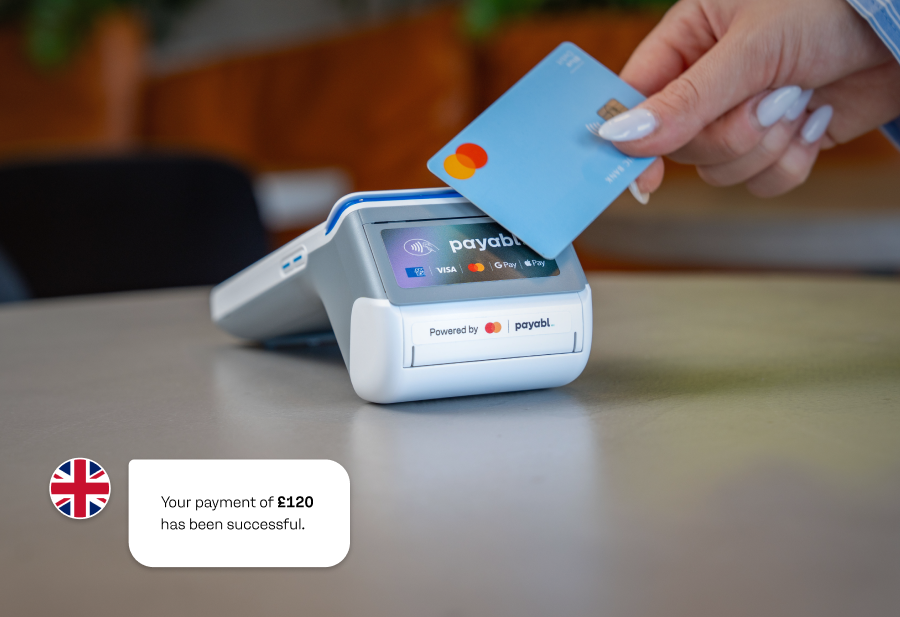
On March 19th, 2026, the Financial Conduct Authority (FCA) is relaxing the rules to let banks and payment providers set their own contactless limits. Instead of a single industry-wide cap, banks and card issuers will be able to set their own thresholds, or potentially remove them altogether.
Despite the rule change, that does not mean every cardholder will suddenly be able to tap for any amount overnight. Limits can still be applied by consumers at their discretion, and banks can also apply limits if they choose too.
In the short term, many providers are still expected to keep existing limits in place while they review their fraud controls and update their systems. The direction of travel was however made clearer: contactless card payments are becoming more flexible, and the gap between physical cards and digital wallets is starting to narrow.
Closing the gap between physical cards and digital wallets
For some time, there has been a split in the in-store payment experience. Physical cards have typically been subject to the £100 contactless limit, while digital wallets have been able to support higher-value contactless transactions as they use additional authentication such as biometrics.
The decision to remove the hard limit is in line with the changing checkout habits of UK consumers, which are also taken into account by the FCA’s decision. Contactless is one of the most popular payment methods in the UK: New Barclays Consumer Spend data shows a record 94.6 per cent of all eligible in-store card transactions were made using contactless in 2024.
To accommodate this demand, rather than holding the whole market to a fixed national cap, the change is providing issuers more flexibility to decide how contactless should work based on their own risk appetite, fraud controls and customer experience.
For merchants, this should be seen as more of a longer-term checkout trend. To prepare for this, infrastructure readiness from merchants should be prioritised. Payment processors and POS systems should be equipped to handle the imposed issuer limits without creating friction or confusion at the checkout stage.
Better checkout experiences with payabl. in-store
For retailers, higher contactless limits directly translate to faster queue processing and improved customer volume. Higher-value sectors such as consumer electronics, luxury retail, and bulk grocery have historically reverted to customers inserting cards and entering PINs for purchases over £100. Over time, this limitation adds time to each transaction and slows down checkouts, which can affect customer sentiment and experience in-store.
Additionally, different issuer settings and authentication methods mean there could be a variance with different customer’s limits. This makes terminal readiness a business priority for merchants. With payabl.’s in-store POS terminals, merchants are automatically positioned to process higher-value contactless payments as new limits are rolled out and implemented across stores.
The system communicates with issuing banks in real time to verify the cardholder's specific authorized threshold. This means that if a transaction exceeds a bank's limit, payabl.'s POS terminals instantly prompts for PIN verification without declining the payment.
Demonstrating the value of SoftPOS solutions
The removal of the £100 cap could also increase the relevance of SoftPOS solutions — technology which enables merchants to use a NFC-enabled mobile device as a payment terminal. This allows merchants to accept in-person payments using mobile devices rather than relying on dedicated payment hardware.
Russel Luis E Fernandes, Product Manager of In Person Payments at payabl., spoke highly about the change. “Allowing banks and card providers to set their own maximum contactless spend in place of the previous £100 limit is good for economic growth and customer convenience.
With 41% of consumers preferring to use contactless in-store, removing the cap will help meet customer demand, removing the hassle of entering a PIN when paying for large sums or higher ticket items, delivering the same speed and efficiency people expect of smaller payments."
Historically, the £100 physical card limit meant that service-based businesses or similar could only accept larger contactless payments if the customer used a digital wallet. If issuers begin allowing larger contactless card payments, that opens the door for a wider range of merchants, including small businesses, pop-ups and mobile service providers, to take bigger payments on the spot with less friction.
Merchants using SoftPOS solutions to accept payments will be able to process larger sales quickly on site, reducing their reliance on invoicing or expensive card reader hardware.
Where payabl. fits
For merchants, the priority is not to over-prepare for sudden changes on 19th March. Their priority is to ensure their business is ready for a more flexible contactless environment.
With payabl.’s in-store POS and wider SoftPOS solutions, merchants can become better prepared for this and future changes. Businesses need payment technology that supports a smooth customer experience at the point of sale, rather than forcing unnecessary friction into the checkout journey.
Learn more about payabl.'s in-store POS solutions.