Europe has a payment method problem. For merchants expanding across Europe, each new market comes with its own dominant payment method, infrastructure and integration requirements.
The variety of locally dominant payment methods has long been a point of friction too. It means more provider relationships to manage, more reconciliation complexity and more costs on cross-border transactions.
This was one of the clearest findings from the research payabl. commissioned with Juniper Research on financial fragmentation. Payment method complexity across Europe creates measurable drag on merchant growth — particularly for businesses trying to scale across multiple markets.
Fragmentation has built the case for Wero
Europe’s payments ecosystem has developed market by market, with each country building around local customer preferences, plus banking structures and regulatory conditions. The result is a region where payment behaviour differs sharply between markets.
The examples are well established. iDEAL | Wero accounts for around three-quarters of Dutch online payment volumes. BLIK processed 2.9 billion transactions in Poland in 2025 and reached 20.7 million users. In Sweden, Swish serves 8.8 million users, or more than 80% of the population. For merchants selling across Europe, they are non-negotiable for an optimal checkout strategy.
The difficulty is that supporting these methods individually creates more operational drag every time a merchant enters a new market. More integrations lead to separate reporting structures, settlements and reconciliation processes. Juniper Research found that this fragmentation can push month-end reconciliation to as much as 10 days in heavily manual environments, with annual salary-cost implications of €49,000 for an SMB, €244,000 for a mid-market business and €732,000 for a large corporate.
How Wero stands apart
Wero is the European Payments Initiative’s (EPI) response to European fragmentation. Developed by EPI and backed by Europe’s largest banks, it is built on SEPA Instant rails and works as a pan-European wallet. In practical terms, it offers a single option for payment acceptance across countries that have historically relied on varied domestic methods.
Wero’s approach means it’s not another payment method to add in. It reduces the fragmentation that has made European expansion a pain point for merchants. The underlying infrastructure supports ecommerce, peer-to-peer, A2A and in-store payments under one system.
Wero’s operating model matters here too. Payments clear in under 10 seconds, including cross-border transactions, and the service is already live in the Netherlands, Germany, Belgium and France. As of June 2026, it had been used by more than 50 million Europeans, with further roll-outs planned across Europe through 2026 and 2027.
Why Wero matters for merchants
Previously, adding more payment methods to expand meant additional complexity, with every new market meaning another layer of operational overhead.
Wero consolidates this for merchants. This doesn’t make managing payment complexity simpler overnight. Local preferences are still dominant, and merchants need to offer broader payment coverage in the near term. Wero offers a more unified European payments environment, where cross-border growth is prioritised with less friction.
This outcome aligns closely with the wider findings of the Juniper Research whitepaper. The report argues that fragmented financial infrastructure slows decision-making and makes scaling harder to manage. It also argues that unified operating models improve speed, visibility, liquidity management and payment orchestration.
How payabl. connects merchants to Wero
In October 2025, payabl. became one of the first licensed members of the European Payments Initiative and a direct participant in Wero. This allows payabl. to help European merchants and PSPs reduce friction and costs at checkout.
Merchants have access to payabl.one, which connects acquiring, local payment methods, multi-currency business accounts and more in one environment.
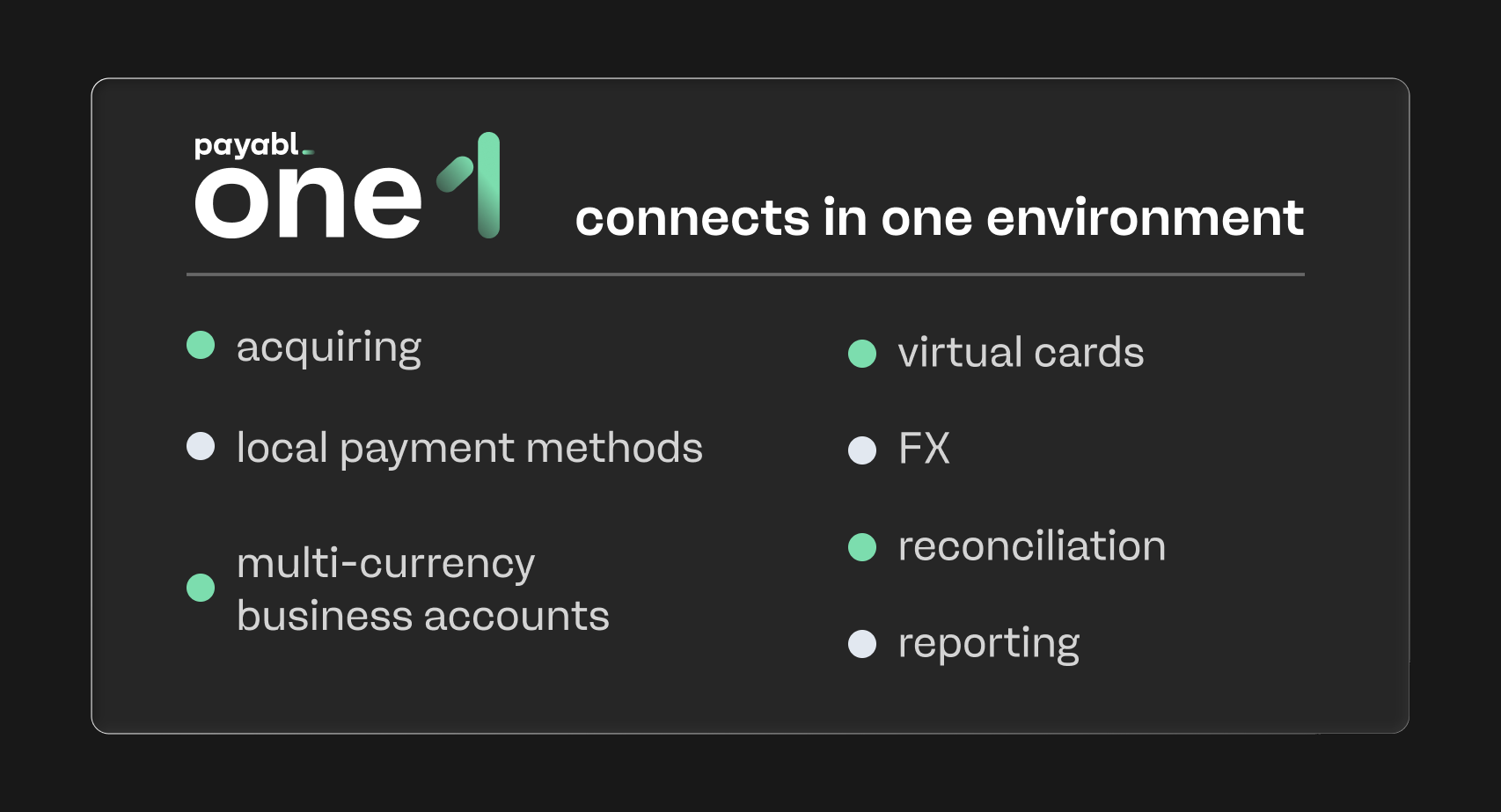
This takes into account broader findings: payment methods become more strategically useful when they fit into a unified financial operating layer like payabl.one, which provides merchants with full visibility across markets and channels.
For PSPs, it’s the same. As Wero expands, merchants will increasingly expect support for it. PSPs that provide support without additional infrastructure requirements are better placed to serve multi-market clients.
Get the findings from Juniper Research
For European merchants, Wero is a signal that the region’s payments infrastructure is moving toward more unified models. For merchants that want to expand without fragmentation, this is important.
The takeaways from the research remain the same. Fragmentation is no longer just an operational inconvenience. It is a growth issue, and businesses that reduce it are in a stronger position to scale across Europe with more visibility and less drag built into financial operations.
The full whitepaper explores these findings in more detail, including how fragmentation affects merchants at different stages of growth and what a unified financial operating model looks like in practice.
Read the full whitepaper, with data on how fragmentation affects merchants at every stage of growth