According to Visa's 2026 Global eCommerce Payments and Fraud report, the average cost to resolve a single first-party misuse dispute now exceeds $80, with the figure rising for the third consecutive year. This figure goes beyond the chargeback fee itself. It's the time spent on gathering evidence, the revenue lost to refunded transactions and the operational burden of managing cases across disconnected systems.
For merchants processing tens of thousands of transactions per month across subscription services, digital goods, or high-volume ecommerce, chargebacks aren't isolated events. They're experienced as a persistent operational tax.
Friendly fraud is accelerating the problem
The root cause behind much of this cost growth is first-party misuse, or friendly fraud. This is when a legitimate cardholder disputes a transaction they made. The card wasn't stolen, and the purchase was real, but the dispute is filed anyway.
Visa's report found that 64% of merchants reported an increase in first-party misuse over the past year, with one in four citing increases of 25% or more. payabl.'s Fraud in Europe Report found that 31% of UK-based businesses surveyed said they had been targeted by friendly fraud, while 71% believe that current chargeback rules favour customers and cost businesses money.
Nearly three-quarters of merchants feel the system is weighted against them. The perception — among the ones actually absorbing the cost — is that disputes are easier to file than they are to defend.
Moving from prevention to management
For years, the industry conversation around fraud focused on stopping it at the point of sale or earlier. Better authentication, smarter risk scoring and tighter checkout controls work for transaction fraud. But friendly fraud happens after the sale. Disputes arrive days or weeks later, leaving the merchant with the operational burden of building a case from order records, delivery confirmations and IP logs.
Visa's report noted that 29% of merchants now cite cost minimisation as their top fraud management priority. Many expect their spending on fraud tools and resources to stay flat or decline, while teams are being asked to handle more disputes with the same or fewer resources. This creates a gap between the scale of the problem and the capacity of teams to respond effectively.
The conversation is moving from stopping fraud at checkout to managing disputes after the sale. The goal isn’t to replace prevention but to acknowledge that for merchants, a significant portion of the problem with chargebacks and disputes sits beyond their reach.
What pre-dispute resolution actually does
Visa's Rapid Dispute Resolution (RDR) addresses this by intervening at the pre-dispute stage — the brief window after a cardholder contacts their issuer but before a formal chargeback is filed. RDR uses a rules-based engine to auto-resolve eligible disputes in real time. The merchant sets the parameters: transaction amount, currency, dispute reason code and more.
When an incoming dispute matches those rules, it's resolved automatically with a refund. No chargeback is created. No fee is incurred. The cardholder receives a refund while the merchant avoids the operational and financial costs of a formal case.
Critically, pre-disputes resolved through RDR with a credit do not count against Visa's dispute ratio. For merchants operating under Visa's VAMP (Visa Acquirer Monitoring Program) framework — where a breach of dispute thresholds triggers penalties and restrictions — this is a practical way of staying within scheme limits.
payabl. is now working with Visa as an authorised reseller of RDR across the UK and EU. The service is available to any merchant, including businesses processing with other acquirers. Go-live takes a maximum of 10 business days, and no API changes or additional engineering work is required.
One view for all your disputes
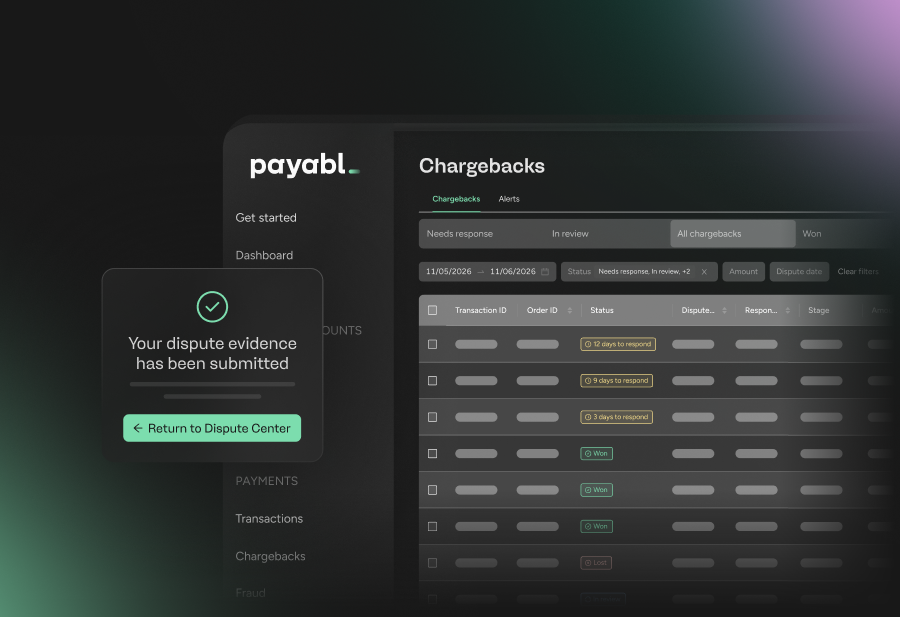
payabl. dispute solutions brings Visa RDR and the payabl. dispute center into a unified view inside payabl.one. Merchants see every dispute across both schemes in real time. This includes chargeback data, filtering, insights, and direct case defence with evidence upload. All from the same platform merchants already use for payments and business accounts.
The intent is straightforward: to reduce the number of systems merchants have to check, the number of vendors they have to manage and the time between a dispute being raised and a decision being made.
The cost of not taking action
Chargeback volumes and dispute ratios are not going to improve on their own. Friendly fraud volumes are rising and the cost per dispute is climbing. Now, scheme monitoring programmes are placing more pressure on merchants to keep their dispute ratios below scheme thresholds.
Doing nothing is becoming an increasingly expensive option for merchants. For those who want to understand what pre-dispute resolution and payabl.one look like in practice, payabl.'s dispute team will walk you through enrolment, rule setup, and how RDR fits alongside your existing fraud and payments infrastructure.