The rapid rise of ecommerce, the adoption of digital payments, and consumer expectations for faster, seamless shopping experiences have created new opportunities for merchants.
Yet these same developments herald new challenges, with fraud increasing in both scale and sophistication. In 2024, the global ecommerce sector lost a staggering $44 billion to fraud – and the total is expected to surpass $100 billion by 2029. One study by Sift suggests that European merchants are now losing 2.8% of their revenue to fraud.
Merchants, consumers, regulators, and technology providers all have a role to play in combating fraud and strengthening trust. This cannot be achieved through technology alone; education and collaboration are key.
To better understand how the changing nature of retail has created new vulnerabilities as well as new growth opportunities, payabl. commissioned research drawing on the insights of 200 senior decision makers at merchants with operations in the UK and the European Union (EU). Alongside this, payabl. also gauged the views of 2,000 UK consumers to understand the impact of fraud from both sides of the transaction.
The report identifies a number of trends, including fraud’s worsening financial and emotional impact, the inherent dangers of peak shopping periods, and the emerging tools and tactics that can combat scams.
Pointing out the price of retail’s digital boom
Global ecommerce is projected to reach $6.86 trillion by the end of 2025. In line with this, nearly six in ten (57%) retailers say growing online sales is their top priority for the year ahead, rising to 71% of SMEs. Conversely, growing in-store sales ranked as the lowest priority (24%).
This underlines what’s already clear: the future of shopping is increasingly digital and merchants must seize the opportunities from this in order to grow. However, this comes at a price, with 53% of businesses and 47% of consumers reporting they’ve seen a growing number of scam and fraud attempts over the past 12 months.
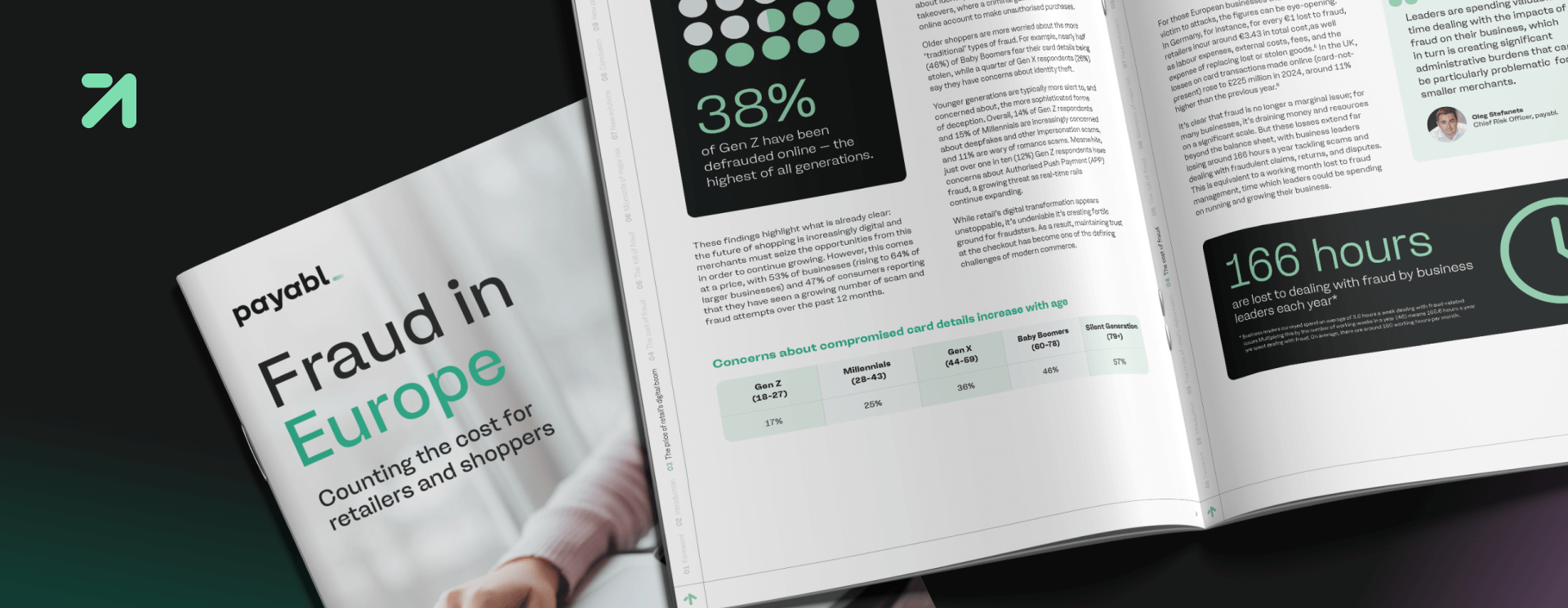
Younger shoppers are both the most digitally engaged and the most vulnerable, with 38% of Gen Z respondents saying they’ve been a victim of fraud (compared to an average of 26% across all age groups). Gen Z is also the most likely to have been defrauded online (30%), suggesting those most familiar with the digital world have become its most frequent targets.
While retail’s digital transformation appears unstoppable, it’s creating fertile ground for fraudsters. Maintaining trust at the checkout has become one of the defining challenges of modern commerce.
Assessing the rising cost of fraud
Most (86%) merchants say their business has been targeted by scams or fraud attempts within the last 12 months.
The financial impact is eye-watering. In Germany, for every €1 lost to fraud, retailers incur around €3.43 in total cost, as well as labour expenses, external costs, fees, and the expense of replacing lost or stolen goods. In the UK, losses on card transactions made online (card-not-present) rose to £225 million in 2024, around 11% higher than the previous year.
But losses extend far beyond the balance sheet, with merchants losing around 166 hours a year tackling scams and dealing with fraudulent claims, returns, and disputes. This is equivalent to a working month lost to fraud management, time which leaders should be spending on growing their business.
When it comes to the different types of fraud businesses are facing, fraudulent returns and refund fraud (44%) tops the list, with chargeback fraud also featuring prominently (31%).
Given its growing prevalence, fraud has essentially become an extra tax on Europe’s businesses, hoovering up both time and money while also hitting their customers’ wallets. A quarter (26%) of consumers have been a victim of fraud, losing £330 (€380) on average.
Recognising the emotional and reputational toll of fraud
While financial losses are paralysing, there is a much wider impact on both merchants and their customers.
Over half of businesses (52%) say fraud has led to reputational damage for their brand, while 21% have noticed a subsequent drop in customer loyalty. “Fraud is much more than a financial setback,” said Ugne Buraciene, Group CEO, payabl., commenting on the report’s findings. “Many businesses struggle to recover from the severe reputational damage it can cause; their customers perceive fraud as a breach in trust that won’t be quickly forgotten.”
For consumers, fraud is personal as well as financial, with victims blaming themselves (23%) or feeling embarrassed (20%). Two in five (41%) are now more cautious when shopping online, while 21% have simply stopped shopping with the retailer in question.
Taken together, these findings show fraud is not only a financial issue: it erodes customer confidence, affects brand reputation, and has tangible operational consequences for businesses.
Highlighting the major moments of risk
Peak sales periods coincide with peak fraud risk. Black Friday and Cyber Monday are cited by retailers as the most likely time of the year for fraud spikes (37%), ahead of other periods of increased traffic, such as the January sales (30%).
Consumer behaviour reflects this heightened awareness of risks when shopping online. Six in ten (60%) abandon their baskets if something looks suspicious at checkout, or if they sense the risk of fraud.
However, abandonment drops to 34% for Gen Z and 48% for Millennials, suggesting younger generations are more comfortable with potential risk in the clamour for good deals. Indeed 13% of Gen Z respondents would still press ahead with the purchase regardless of red flags, helping to explain why they’re the most likely to have been defrauded.
While most shoppers exercise caution when warning signs appear, certain segments remain vulnerable. Merchants must remain vigilant, balancing opportunities for growth with proactive fraud prevention and clear communication to maintain customer trust.
Searching for new solutions
Businesses and consumers agree much more must be done to combat the fraud threat. Nine in ten (87%) retailers recognise that effectively preventing fraud is a vital component of long-term success.
Encouragingly, three-quarters (76%) are planning to invest more in fraud prevention tools in the year ahead. “Reducing fraud will require closer collaboration between merchants and their payment partners,” added Buraciene. “By working in tandem and sharing data, implementing the right compliance measures, and leveraging AI and other emerging technologies, we can balance innovation with consumer confidence and create a safer ecommerce ecosystem.”
There’s also a need for greater collaboration across the entire ecosystem. Most (88%) merchants think banks should do more to intercept fraudulent payments; 84% say Europe’s governments need to do more to make clear who is responsible for fraud; and 75% believe social media platforms aren’t properly clamping down on fraud.
Digital IDs are emerging as a potential solution. The UK government has announced they will become mandatory for Right to Work checks by the end of the Parliament, while the EU is developing the EU Digital Identity (EUDI) Wallet, which is expected to be available to all EU citizens and businesses from late 2026.
However, payabl.’s survey reveals split views. While 81% of businesses would be happy to incorporate payment options that use Digital IDs if it helps reduce fraud, 79% worry fraudsters will simply find a way around them. Half (49%) of shoppers, meanwhile, would feel comfortable using a Digital ID to pay online, and 59% believe the time is right for wider adoption.
Whether it’s integrating Digital IDs or implementing the latest AI-powered fraud prevention tools, adoption of new innovations must be carefully managed, with clear communication to ensure effectiveness and customer acceptance.
Merchants who bolster their cyber defences, partnering with established payment providers where necessary, will be the ones well placed to maintain trust and convenience for consumers, while securing sustainable growth.
Download Fraud in Europe: counting the cost for retailers and shoppers to discover how you can address the spike in scams.