An online merchant is a business or individual that sells products or services over the internet. If you run an ecommerce store, a subscription service, or a SaaS platform, you are an online merchant, and understanding what that role involves is the first step to building a profitable business.
As time passes, more and more industries are expanding into the online space. From grocery and consumer electronics to DIY and health products, consumers are largely choosing online as their preferred avenue for making purchases.
Based on a study by Statista, the year 2023 saw a whopping $4.8 trillion in global retail eCommerce revenue. In the next four years, this number is expected to exceed $8 trillion!
In this article, we talk about the people who make the online shopping experience possible for all kinds of consumers in all parts of the world–online merchants.
What is an online merchant?
An online merchant, also known as an ecommerce merchant, is an individual or a company that sells products or services online. To be able to sell online, a merchant needs to establish an online shop in the form of a website or mobile app. This portal is connected to a payment gateway to enable the merchant to receive online payments, which are one of the defining features of an online purchase.
There are many different types of online merchants, categorized based on what they sell, the processes they follow, or the types of customer bases they cater to. Here are some examples.
- eCommerce merchants
- Online retailers and wholesalers
- Affiliate merchants
- Dropshippers
- Subscription services
- B2B, B2C, D2C, and C2C merchants

Online merchant vs online seller
The main difference between an online merchant and an online seller is scope: an online seller focuses on buying and selling goods for profit, while an online merchant also runs marketing, inventory, logistics, customer support, and payments.
An online seller’s main responsibility is to generate profit through buying and selling goods over the internet.
In comparison, the responsibilities of eCommerce merchants are not just limited to buying and selling products but also expand to other business activities. An online merchant handles several business operations, such as running online advertising and marketing campaigns to promote their products or services, building a social community, managing inventory and logistics, enforcing quality control, providing customer support, and handling payments.
Despite the increased responsibilities, being an online merchant is advantageous over being an online seller. Online merchanting is a holistic approach that can boost the company's market position.
What are the responsibilities of online merchants?
An online merchant is responsible for a wide range of business operations, from stock control to customer service. Maintaining an online store requires time and effort as it involves many more functions than simply selling goods. Here’s what being an online merchant entails.
1. Inventory control
Ecommerce sellers might process thousands of purchases every day. It's important to know what goes in and out of the business every second. Imagine the customer’s disappointment when they place an order for a favourite item, but you have to cancel because your website didn’t reflect the stock-out in time due to a mismanaged product database.
Thus, it is vital to use an automated system for managing inventory. The software should monitor product availability in real-time and trigger instant notifications for low inventory or out-of-stock items to efficiently manage orders and keep shoppers happy.
2. Coordination of digital media and product descriptions
An eCommerce merchant should work in conjunction with digital marketers and web designers to improve their website and their customers’ shopping experience. It is crucial to display correct information on their website, with up-to-date optimized pictures and a complete set of product descriptions.
The use of clear visuals, creative graphics such as product photos and videos, and straightforward, comprehensive item descriptions will enhance the customer experience and lead to higher sales.
3. Researching online and offline wholesalers
Online merchants are accountable for reaching out to wholesalers to restock products or find new items to add to their eCommerce store. Even if an online merchant has a store that is doing well, it runs the risk of becoming obsolete to some audiences if it doesn’t consistently stay on trend and offer relevant products.
For instance, for online clothing stores, it can be difficult to stay up to date with the rapidly changing fashion industry. Thus, they are always on the lookout for the latest trends to update their product catalog accordingly.
4. Customer service excellence
Putting the customer first is a must for any vendor, let alone an online merchant who has no in-person influence on the customer experience. Customer-centric processes such as the fulfilment flexibility for on-time and even next-day delivery capabilities, as well as the ability to make online purchase returns fast and convenient, are becoming paramount in the competitive eCommerce space. Online merchants must ensure they have the right processes in place to fulfil the demanding customer service expectations of online shoppers.
5. Continually work to boost brand awareness both online and offline
An online merchant is responsible for building awareness for their brand through various marketing activities.
While it is essential to invest in digital marketing strategies such as paid search advertising and SEO, they should also consider other traditional methods like pop-ups and promotional events. Communication channels such as social media or text messaging can be used for promotions and constant merchant-customer communication.
Furthermore, it is becoming increasingly important to leverage artificial intelligence for analyzing the data collected via various marketing and communication channels. This helps online retailers improve the execution of all their future marketing campaigns.
What makes for a successful eCommerce merchant?
There are certain characteristics an eCommerce merchant should possess to achieve optimum efficiency, effectiveness, and maximum profitability. Here are a few characteristics that contribute to the success of an online merchant.
A fast website
This is very important for user experience. As traffic to the site increases, you need to make continuous improvements to manage the extra load and maintain a smooth user experience. For instance, online sellers heavily rely on high-quality product images. One of the main issues that slow down an eCommerce website is image size. It's important to optimize product images. You can change the resolution, compress them, and crop them before you upload them to your website.
Responsive design
With many customers arriving via mobile, it is essential that an eCommerce website follows responsive design. A website is considered responsive when its design fits and functions smoothly on any screen size without affecting its usability. This way, customers can easily browse and navigate your online store through a laptop, a smartphone, or anything in between. This can help you achieve high levels of customer satisfaction and engagement.
Appealing product photos
Visual appeal affects online sales generation. Ensuring that you use high-quality photos that are appealing to the user is crucial for the success of any online business. You can even add product videos and brief demos. However, keep in mind that all media should be optimized to minimize page load times.
Professionally written content
Product descriptions need to be easy to understand and written with marketing principles in mind. An online merchant can utilize a marketing agency that specializes in writing content for eCommerce stores to create a complete, attractive, and informative website.
Frequent promotions
A person looking for something to buy online can choose from a plethora of options – competition is fierce. Thus, online merchants need to consider all possible ways to bring in and retain customers. Use special offers, such as price reduction campaigns, sales promotions, and discount codes, to attract new customers or reward your loyal customers.
Calls to action
An online merchant needs to have clear buttons for each action they want the customer to perform. Have clearly labelled CTAs for each action, such as purchase, add to cart, checkout, and place order. These should be attractive in terms of both text prompts and from an aesthetic perspective.
Easy-to-navigate shopping and checkout experience
Successful online merchants place themselves in the customer's shoes and create an eCommerce store which is easy to navigate and provides a seamless checkout experience to prevent cart abandonment issues. To maximize conversion, avoid asking customers for unnecessary information when submitting their personal information, and ensure that the payment process is quick, easy, and guarantees security.
Customer reviews
Customer feedback is a necessary practice for every online merchant. There is no better way to improve the eCommerce customer experience than directly asking the user how they feel. Ask them to review your products, the overall service, the navigation experience on the online store, the delivery service, and other aspects of their experience.
Visitors who read positive or even average customer reviews on a merchant’s website will trust that brand more easily than a vendor with no reviews at all. Providing the tools and incentivizing the customers to leave reviews and ratings is a must in converting today's online shopper who looks for feedback from other shoppers before finalizing purchasing decisions.
Communication with the customer
Online merchants who communicate with their customers through automated live chat support, FAQ sections, emails, well-trained live agents, or any other preferred channel, build trusting merchant-client relationships. Moreover, utilizing merchandising features such as push notifications, wish lists, and product reviews contributes to open communication with shoppers and ensures first-class customer experiences.
Who Online Merchants Work With
Just like a brick-and-mortar store, an eCommerce store also needs to be supported by various suppliers and partners. Here are five key parties with whom an online merchant must partner up.
Technology providers
These provide technological services to help with the development and optimization of the business. Many technology companies assist online merchants with services such as eCommerce platform development, mobile app development, web hosting, plugins, API integration, financial data management, digital security, and more.
Payment providers
A payment gateway is a vital aspect of an eCommerce website. You can partner with payment providers such as payabl. to start accepting online payments through a secure payment gateway. payabl. works with online merchants to ensure that their clients get a smooth and seamless payment experience. We provide a portfolio of global payment methods to support online merchants' localization strategies, whether those shoppers come through online or mobile access points.
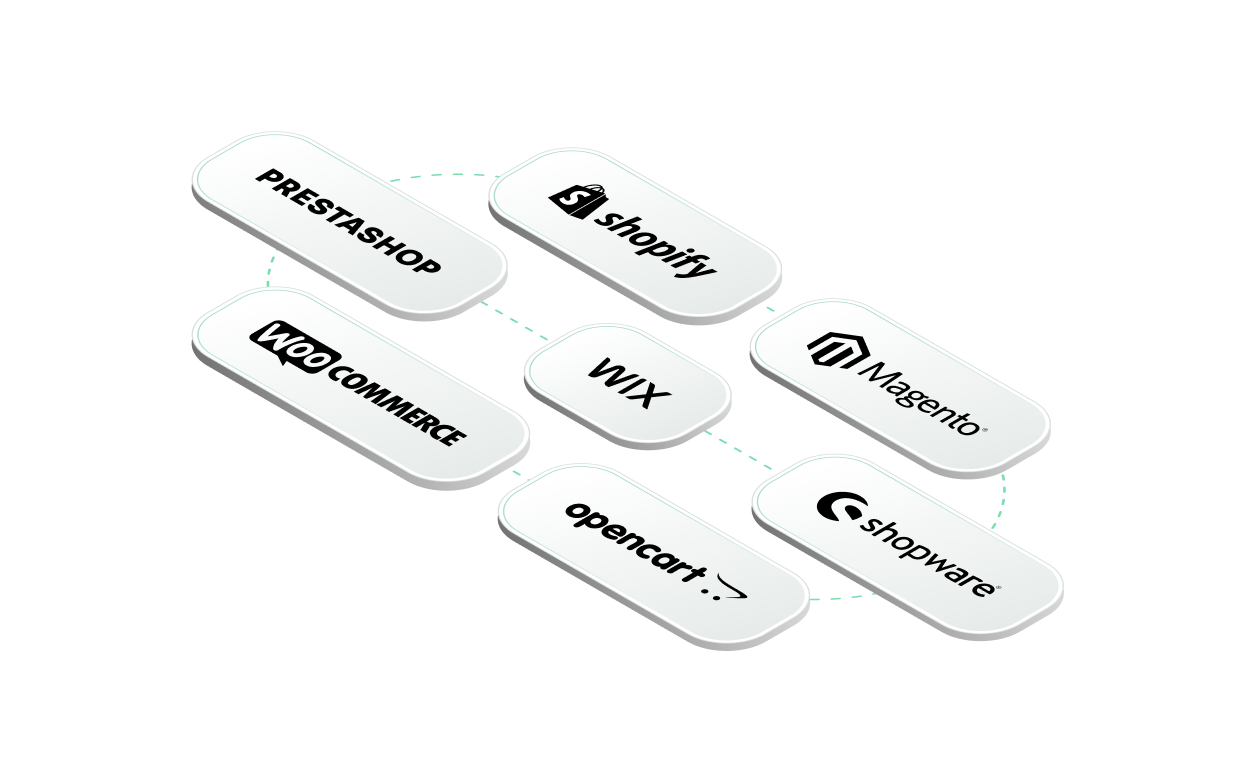
Ecommerce platforms
Ecommerce platforms are software solutions that enable the creation of online storefronts. When choosing an eCommerce platform, online merchants should consider factors such as available features, loading speed, business compatibility, and possible integrations for online sales, marketing, payments, and other essential functions.
ERP providers
Enterprise Resource Planning (ERP) software ties together the various processes required to operate a business on both the frontend and backend, such as inventory control, order management, accounting, human resources (HR), customer relationship management (CRM), and much more.
Logistics partners
Logistics refers to the process of how products are obtained, stored, and shipped to their final destination. To stay competitive, every online merchant should invest in efficient logistics management, with digitalization and automation features based on the latest tech.
How to get a merchant account
To get a merchant account, an online merchant registers the business, opens a business bank account, chooses a payment provider, submits an application with supporting documents, passes underwriting, and then integrates payment processing to start accepting online payments. Think of a merchant account like a holding tank behind a shop till: money from each card payment flows in and settles there before it is transferred to your main business account. Here is how an online merchant sets one up, step by step.
1. Register your business
Make sure your business is legally registered and holds any licences, permits, and tax identifiers your country requires. Providers verify this before they approve a merchant account.
2. Open a business bank account
A merchant account is not the same as a business bank account. The merchant account receives funds from customer transactions; the business bank account is where those funds are paid out. You need both, so choose a bank with low fees and solid support.
3. Choose a payment provider
Compare providers on transaction fees, settlement times, security and fraud tools, supported payment methods, integrations, and reputation. Many online merchants now skip a standalone merchant account and access the same functionality through a payment provider such as payabl., which combines the account, gateway, and processing in one place.
4. Complete the application
Expect to share your company name, registration and tax details, contact information, business model, expected monthly volume, and the payment methods you plan to accept. Accurate, complete information speeds up approval.
5. Provide supporting documentation
Typically business registration documents, recent bank statements, and, for some sectors, processing history. Clean, current documents reduce back-and-forth during review.
6. Pass underwriting and approval
The provider assesses the risk of your business, which can take anywhere from a day to a few weeks. Low-risk, well-documented merchants are approved fastest; high-risk industries face extra scrutiny.
7. Integrate and start accepting payments
Once approved, connect the payment gateway to your website or app, run a few test transactions, and go live. From here your online merchant business can accept cards, wallets, and local payment methods.
How payabl. helps online merchants: payabl. lets online merchants accept online payments through a secure payment gateway, offers business accounts to receive and manage funds, and extends the same journey to POS and Tap to Pay in store. Instead of vetting, applying for, and integrating a separate merchant account, merchants get one omnichannel setup and a portfolio of global and local payment methods.
To get started, fill in the payabl. contact form or merchant form and the team will map the right setup for your business.
Every online merchant lives or dies by the payments behind the sale
Being an online merchant is far more than listing products and waiting for orders. It means owning the whole experience, from inventory and content to logistics, customer service, and, above all, payments.
You can build the fastest website and the sharpest brand, but if checkout stalls or approvals fail, the sale disappears. That is why choosing the right payment provider and merchant account setup is not a back-office detail; it is the engine of your revenue.
Get the foundations right, partner with a payments specialist that grows with you, and the rest of the online merchant playbook has room to work. In the end, every online merchant lives or dies by the payments behind the sale.
Frequently asked questions about online merchants
What is an online merchant?
An online merchant is a business or individual that sells products or services over the internet through a website or app connected to a payment gateway. Online merchants are also called ecommerce merchants.
What is the difference between an online merchant and an online seller?
An online seller focuses on buying and selling goods for profit. An online merchant does that too, but also manages marketing, inventory, logistics, customer support, and payments across the whole business.
What are the main types of online merchants?
Common types include ecommerce merchants, online retailers and wholesalers, affiliate merchants, dropshippers, subscription services, and B2B, B2C, D2C, and C2C merchants.
How do I become an online merchant?
Set up an online store, source products or services, connect a payment gateway to accept online payments, and put logistics and customer support in place. Then get a merchant account or a payment provider so you can process card and wallet payments.
How do I get a merchant account?
Register your business, open a business bank account, choose a payment provider, complete the application with supporting documents, pass underwriting, then integrate payment processing and start accepting payments. A provider such as payabl. can combine the account, gateway, and processing in one setup.
Do online merchants need a payment gateway?
Yes. A payment gateway securely captures and authorises online payments. Without one, an online merchant cannot accept card or digital wallet payments on a website or app.