For most retailers, peak sales periods represent the year's most important trading windows. Periods like Black Friday, Cyber Monday and January sales are moments businesses plan and forecast for. Stock is taken, staff schedules finalised, and promotional budgets increased to capture maximum revenue.
However, what the data increasingly shows is that fraudsters plan around these moments too.
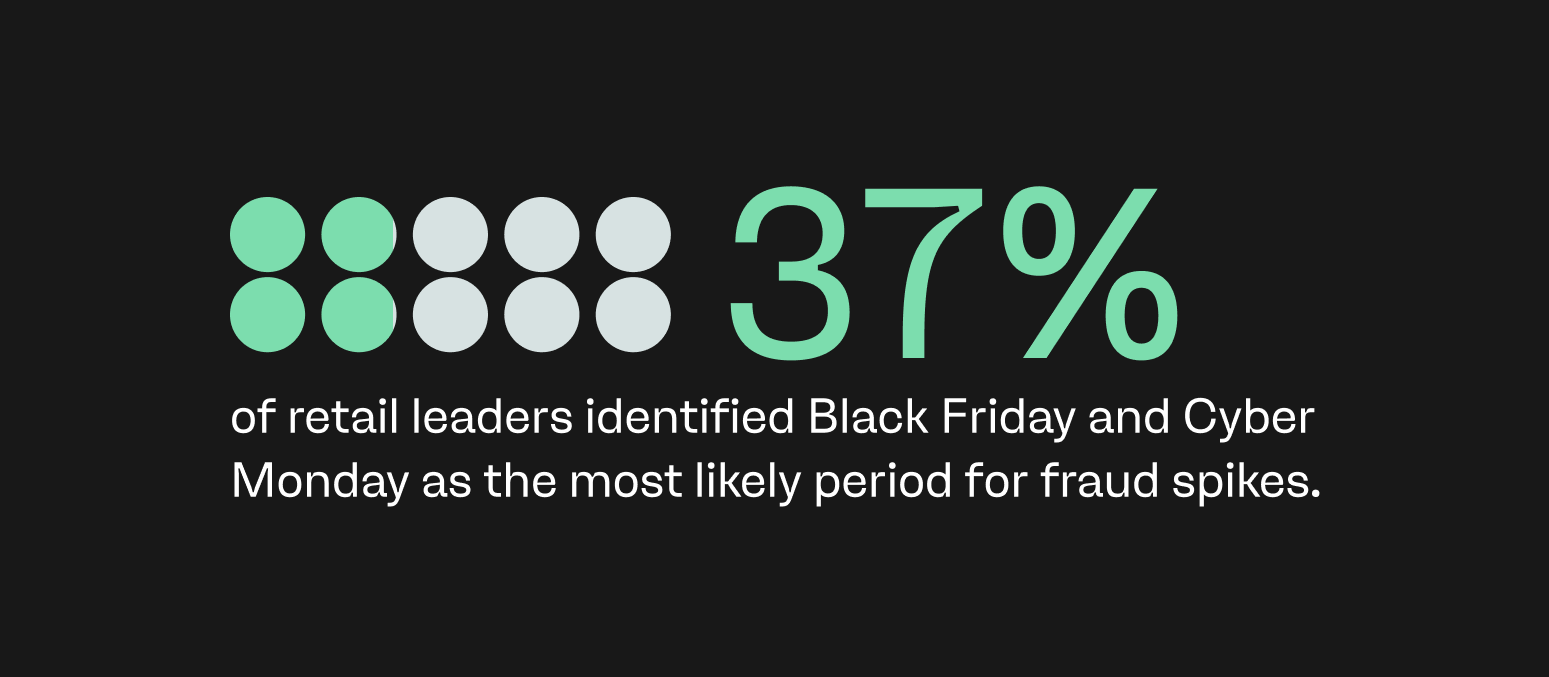
According to payabl.'s Fraud in Europe report, events like Black Friday and Cyber Monday are now identified by retail leaders as the most likely period for fraud spikes, as cited by 37% of respondents. The summer holidays follow at 33%, with the January sales season close behind at 30%. Tax refund season and the back-to-school period round out the calendar, flagged by 25% and 24% of merchants respectively.
For merchants, the pattern is clear: periods of higher fraud risk and potential loss track the retail calendar closely.
The scale of the problem at peak periods
The commercial implications make these fraud spikes significant. Global online sales reached $314.9 billion during Cyber Week (Black Friday-Cyber Monday) in 2024 alone, a record high, with volumes expected to continue rising. To add, nearly two-thirds (64%) of larger businesses already report a notable increase in fraud or scam attempts over the past year, with many recording the sharpest increases during these promotional peaks.
For a minority of merchants, fraud is not a seasonal concern at all. 19% report that fraudulent activity occurs consistently throughout the year, suggesting that for some business types and sectors, there is no low-risk window.
For the majority though, the concentration of risk around specific trading periods creates a predictable and manageable threat pattern — provided merchants have the right tools in place to act on it.
Consumer behaviour complicates the picture
The consumer side of this equation adds a further layer of complexity. Six in ten (60%) consumers say they would abandon their cart if something looked suspicious at checkout.
Poor spelling or low-quality images was flagged by 47%, excessive data requests by 40%, and poor reviews by 36%. On the surface, this suggests consumers exercise caution and are aware of typical fraud markets when shopping online.
The data becomes more nuanced when accounting for generation gaps. Cart abandonment rates drop to 48% among Millennials and 34% among Gen Z, which are also the two demographics most likely to be shopping in high volumes during peak periods.
However, 13% of Gen Z respondents say they would proceed with a purchase regardless of warning signs, which correlates directly with data that reveals 38% of Gen Z consumers have been defrauded, compared with 21% of Gen X and 17% of Baby Boomers.
This leads to an interesting finding: the consumers most likely to shop during peak promotional events are, according to data, also the most likely to take risks doing so. As a result, merchants absorb this exposure and risk.
Fraud goes underreported, creating blind spots for businesses
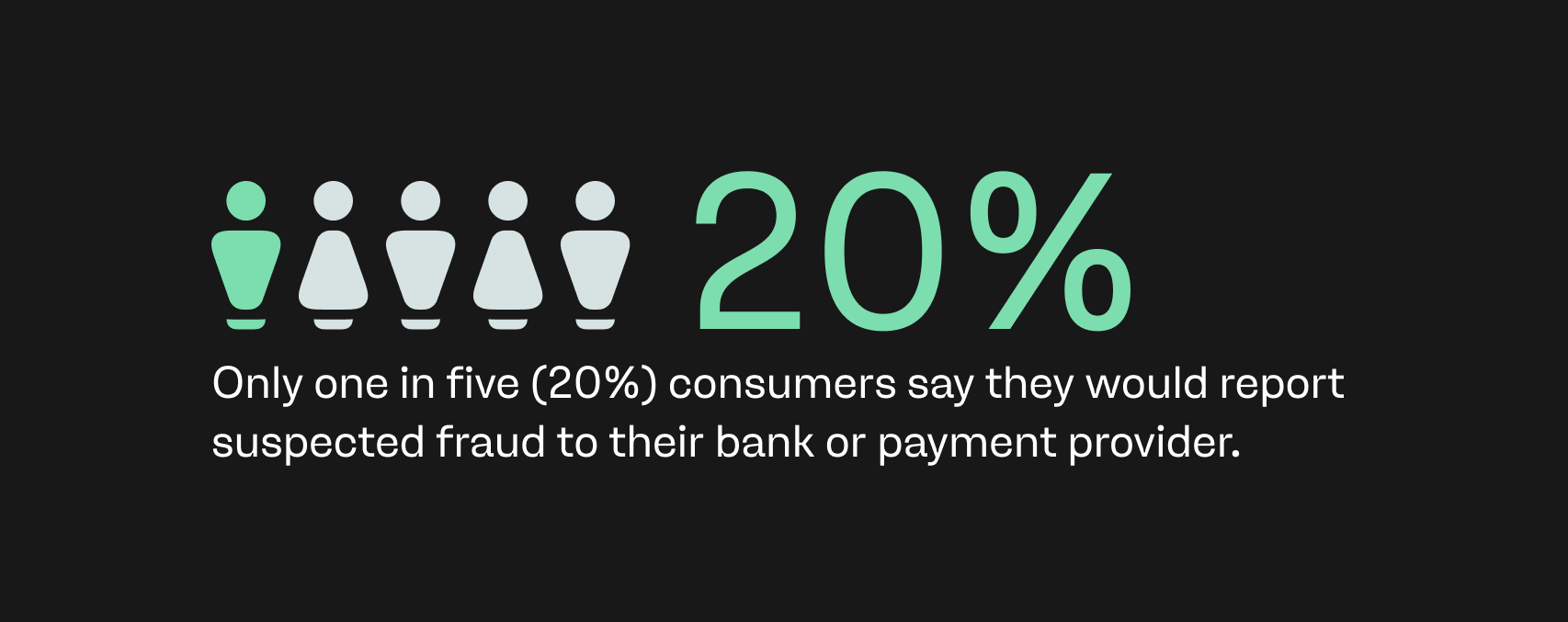
One of the more significant findings in the report concerns fraud reporting behaviour. Only one in five (20%) consumers say they would report suspected fraud to their bank or payment provider. The practical implication this suggests for merchants is that fraudulent activity during peak periods may be considerably higher than internal monitoring shows, with the majority of incidents going undetected and unreported.
This trend of underreporting makes proactive detection during high-volume periods particularly important. Merchants who rely primarily on reactive fraud management methods, like responding to chargebacks and disputes after the fact, are therefore operating with incomplete information and data sets.
This is especially evident during periods when transaction volumes are highest and fraud risk is most elevated.
What builds trust at the point of purchase?
The report also identifies which checkout features give consumers the confidence to complete a purchase. Two-factor authentication and other extra security controls top the list, cited by 33% of respondents.
Positive reviews (32%), recommendations from friends and family (32%), the option to pay via a trusted third party such as PayPal or Klarna (31%), and a clear and accessible refund policy (30%) follow closely.
Notably, biometric and one-tap approval options within banking apps are cited by 15%, and secure storage of payment details by 8%. Additionally, the adoption of solutions such as Visa Click to Pay, which allows customers to complete purchases without re-entering card details, is identified in the report as a practical step merchants can take to improve checkout security without adding friction.
Preparation is the distinguishing factor
The data from the Fraud in Europe report points to a consistent finding: peak periods are predictable year-round, with fraud risk tending to track and spike around those peaks.
With this in mind, the data suggests that most current prevention measures are not able to match this reality for merchants. Those who treat fraud prevention as a priority year-round rather than a reactive process triggered by events can better position themselves to protect revenue during peak trading periods.
The full report contains detailed analysis across merchant size, sector, and geography, along with the consumer data and strategic frameworks needed to build a more robust fraud response.
Download Fraud in Europe: Counting the cost for retailers and shoppers to understand where your business is most exposed, and what the data says about addressing it.